
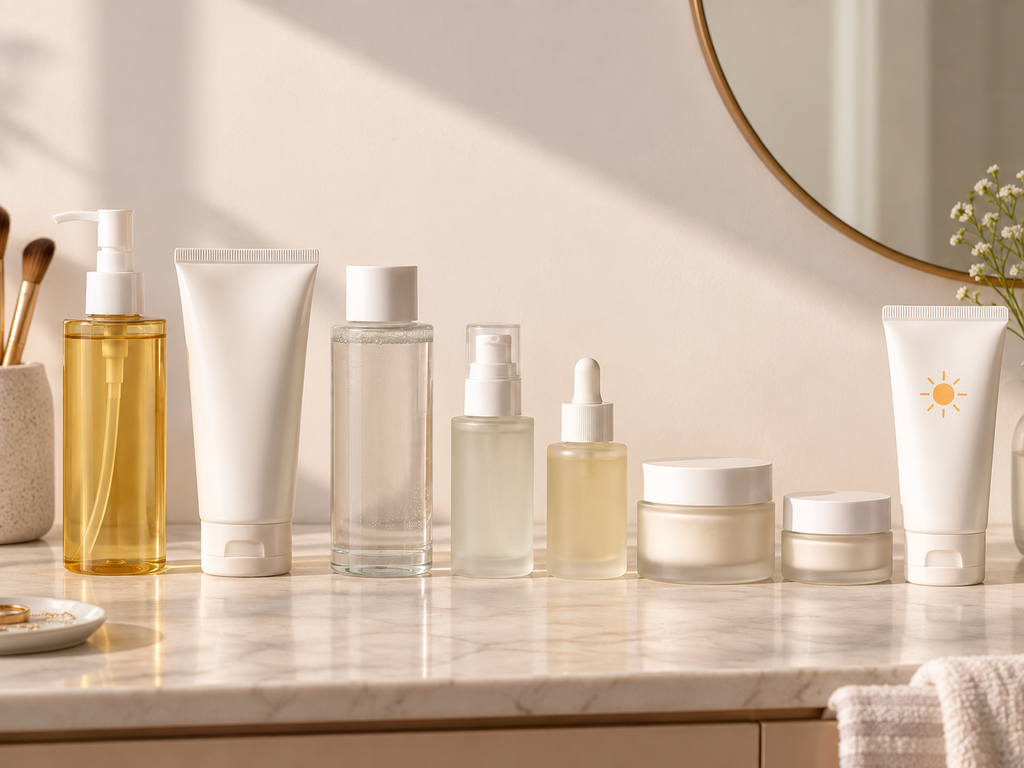
A realistic Korean skincare routine 2026 does not usually mean stacking ten products every morning and night.
There is no single routine followed by everyone in Korea.
A more useful way to understand it is to start at the end of the day: remove makeup and sunscreen, cleanse as needed, choose one or two leave-on steps, and finish with moisturizer.
Morning is often shorter.
A light cleanse or rinse, optional hydration, moisturizer if needed, and sunscreen will make more sense for many people than rebuilding a ten-layer routine before breakfast.
That may sound less dramatic than the famous “10-step Korean routine.”
It is also much easier to use in real life.
Korean Skincare Routine 2026: The Short Version
| Time | Practical Core | Optional Additions |
|---|---|---|
| Night | Remove makeup or stubborn sunscreen, cleanse if needed, use one treatment or hydration step, moisturize | Toner pads, eye cream, spot care, sheet mask, sleeping mask |
| Morning | Light cleanse or rinse, moisturize if needed, apply sunscreen | Toner, serum or ampoule |
The order is flexible because product textures and skin needs differ.
What matters more is knowing why a step is there.
If three bottles do almost the same job, you probably do not need all three.
First, Forget the 10-Step Myth
The 10-step routine became a tidy way to explain K-Beauty overseas.
It introduced unfamiliar categories such as essence, ampoule and sleeping pack, but it also made a flexible approach look like a fixed national habit.
Korean beauty retail in 2026 still offers an enormous range of toners, pads, essences, serums, ampoules, emulsions and creams.
That does not mean one person uses every category in a single routine.
Olive Young even groups essence, serum and ampoule together in one major retail category, which is a useful clue: these labels overlap more than a strict step chart suggests.
You can see the same flexibility in Korean stores: products are organized by function and texture, but there is no requirement to build a routine from every category on the shelf.
The practical version is simple:
keep the basic steps, then add a product only when it has a clear purpose.
Step 1: Remove Makeup and Sunscreen
At night, the first question is not “Which toner should I use?”
It is:
“What is on my face?”
Full makeup, long-wear base products and water-resistant sunscreen may be easier to remove with cleansing oil, cleansing balm, micellar water or a separate eye-and-lip remover.
Light makeup or a non-water-resistant sunscreen may come off with a different cleanser, depending on its formula and how much you applied.
Oil cleanser is common in K-Beauty, and Korean retailers give cleansing oils and balms their own large product categories.
Still, that does not make an oil cleanser mandatory for every face every night.
Choose the removal step according to what you actually wore.
Massage and rinse according to the product directions.
More rubbing is not a bonus step.
Step 2: Second Cleanse — When Is It Necessary?
A second cleanse usually means following the makeup-removal step with a water-based foam or gel cleanser.
It can be useful when the first product is designed mainly to dissolve makeup and sunscreen, or when residue remains.
It is not a universal nightly requirement.
If you did not wear makeup, used a cleanser that already removes what you wore, or find repeated washing uncomfortable, automatically adding another cleanser may not make sense.
The American Academy of Dermatology recommends gentle cleansing with lukewarm water and avoiding scrubbing.
That basic advice matters more than whether a label says foam, gel or “low pH.”
The cleanser should do its job without turning face washing into a household chore.
Step 3: Toner or Toner Pads
Modern Korean toners are not one single type of product.
Some are watery and hydration-focused.
Others contain exfoliating ingredients.
Cream toners feel richer.
The old image of toner as a harsh, alcohol-heavy astringent does not describe the whole Korean category.
Toner pads are pre-soaked pads used after cleansing.
Depending on the formula, people may wipe them across the skin or leave a few in place briefly like small sheet masks.
Convenience is a large part of their appeal, and the format remains highly visible in 2026 K-Beauty coverage.
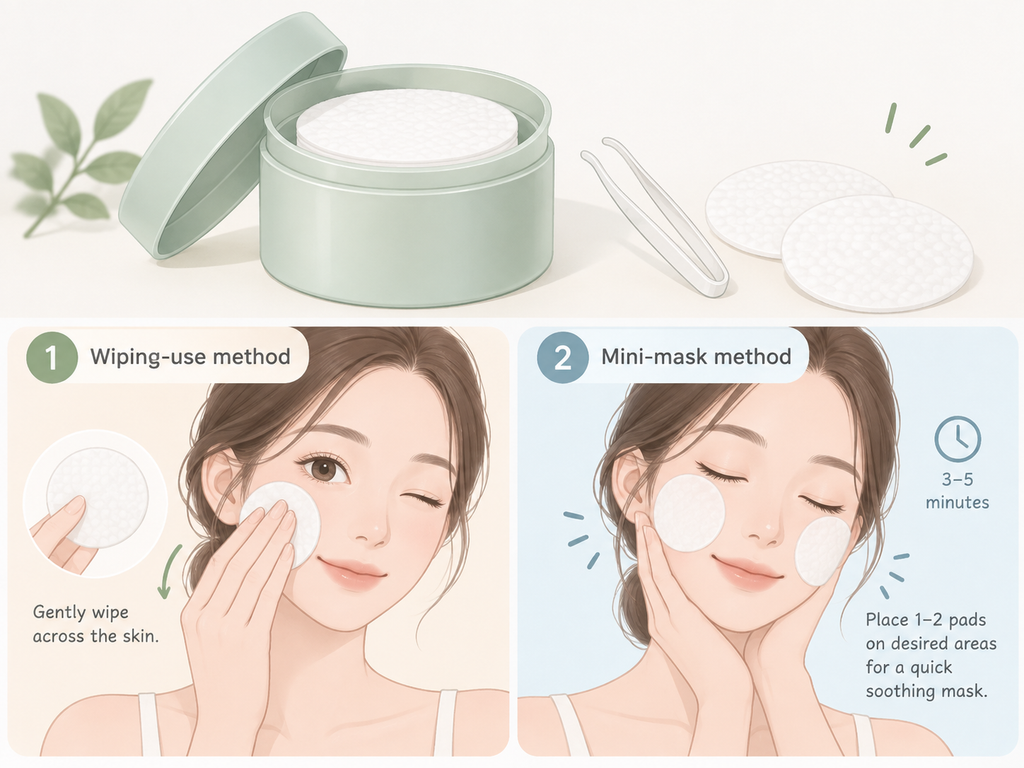
Read the label before treating every pad as interchangeable.
A hydrating pad and an exfoliating pad are not the same product just because they come in similar tubs.
Toner is also optional.
If your serum or moisturizer already gives you what you want, there is no prize for squeezing in an extra layer.
Step 4: Essence, Serum or Ampoule — Do You Need All Three?
Usually, no.
In broad retail language, an essence is often positioned as a lightweight hydrating or conditioning step.
A serum is usually marketed around a more specific concern, while an ampoule may be presented as a concentrated treatment.
But these are not tightly regulated texture levels.
One brand’s essence can feel richer than another brand’s serum.
That is why many people choose one treatment step rather than layering essence, serum and ampoule together.
Look at the formula, texture and purpose—not the prestige implied by the product name.
If you do layer products, apply the lighter texture first and give each layer time to settle.
Stop if the routine pills under moisturizer or feels uncomfortable.
A crowded bathroom shelf is not proof that the routine is working harder.
Step 5: Moisturizer
Moisturizer helps finish the routine and reduce the dry, tight feeling that can follow cleansing.
Korean shelves use several names here:
lotion, emulsion, gel cream, cream and moisturizing cream.
The difference is often texture.
Lotions, emulsions and gel creams tend to feel lighter, while creams may feel richer.
Those boundaries are not universal, so check the actual product rather than buying by category name alone.
Season matters too.
A light gel cream may feel comfortable during a humid Seoul summer, while a richer cream can be more appealing during a cold winter with dry indoor heating.
This is an adjustment, not a rule for every skin type.
Step 6: Optional Night Care
Sleeping masks, sleeping packs, eye creams, spot products and sheet masks sit outside the essential routine.
They can be useful or enjoyable, but they are additions—not proof that you are doing K-Beauty correctly.
A sleeping pack is generally a leave-on product used as the last step at night.
Some resemble a rich cream; others form a light gel layer.
Follow the product directions rather than assuming it belongs on top of every routine.
Spot care deserves the same caution.
Products with active ingredients can overlap with exfoliating toners or treatment serums.
Adding several new products at once makes it harder to tell which one your skin dislikes.
What About Sheet Masks?
Sheet masks remain one of the most recognizable K-Beauty categories, and Olive Young still carries hundreds of options.
They are best understood as an occasional hydration or self-care step, not a daily entrance exam for Korean skincare.
Use one when it suits your routine.
Do not assume that wearing a mask every day is common, necessary or automatically better.
What Does a Korean Morning Routine Look Like?
Morning can be much simpler than night because there is no makeup to remove.
| Step | What to Do | Is It Essential? |
|---|---|---|
| 1 | Gently cleanse or rinse, depending on your skin and preference | Flexible |
| 2 | Apply toner, serum or moisturizer if wanted | Optional according to need |
| 3 | Apply sunscreen as the final skincare step | Core daytime step |
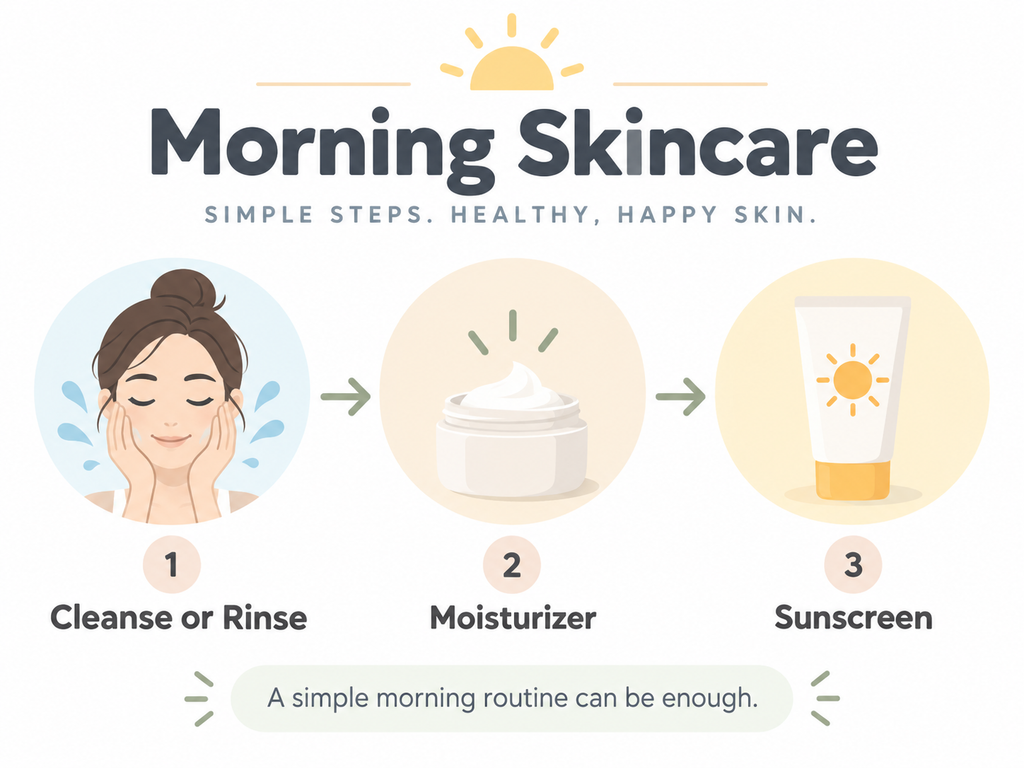
Some people prefer a gentle cleanser in the morning.
Others rinse with water.
The useful question is how your skin feels, not whether a social-media routine included bubbles before 8 a.m.
Sunscreen Is the Step You Will See Everywhere
Sunscreen has an unusually visible place in Korean beauty stores.
Olive Young separates sun cream, sun sticks, sun cushions and other formats, and many formulas are designed to sit comfortably under makeup. For a closer look at textures and formats, see our guide to Korean sunscreens.
Korean labels commonly show both SPF and PA.
SPF relates mainly to UVB protection, while PA indicates graded UVA protection under the Korean functional-cosmetics system.
The Korean Ministry of Food and Drug Safety requires supporting data for SPF and PA claims on functional sunscreen products.
For general sun protection, the American Academy of Dermatology recommends broad-spectrum, water-resistant sunscreen with SPF 30 or higher on exposed skin when outdoors.
Product texture is a preference.
Proper application and following the label still matter.
Do Koreans Double Cleanse Every Night?
Not necessarily.
Double cleansing is common in K-Beauty education because it separates makeup or sunscreen removal from washing the skin.
Actual need depends on what you wore, the first cleanser and how your skin responds.
Someone wearing waterproof makeup may find two different cleansers practical.
Someone who stayed home without makeup may not need the same routine.
Treat double cleansing as a method, not a nightly rule handed down at immigration.
Do Koreans Really Use Toner Pads Every Day?
Some people do; many do not.
Toner pads are prominent in Korean retail and have become more visible internationally because they are quick and easy to demonstrate.
That is evidence of a strong product category, not evidence that every Korean bathroom contains a tub.
Frequency should follow the formula.
A simple hydrating pad and an exfoliating pad may have very different instructions.
What Changes With the Seasons?
Korea’s four seasons can make texture choices feel different across the year.
Spring
People may switch away from very heavy winter creams.
Dry air, dust and rapid temperature changes can still make a completely bare-bones routine uncomfortable, so adjust gradually.
Summer
Humidity, heat and sweat make lightweight lotions and gel creams attractive.
Sunscreen remains important, but a lighter texture can sit better under makeup.
Water-resistant formulas may be more practical for outdoor plans; check the label.
Fall
This is often a transition period.
If a summer gel stops feeling sufficient, add moisture before rebuilding the entire routine.
Winter
Cold outdoor air and heated indoor spaces can make richer moisturizers more comfortable.
Season changes the experience.
What Makes a Routine Feel “Korean”?
It is less about reaching a product count and more about the available formats and the way they are combined.
- Lightweight layers instead of one very heavy texture
- Hydrating toners, essences and ampoules
- Toner pads used as a swipe or brief mini-mask
- Strong sunscreen visibility and makeup-friendly textures
- Cleansing options separated by makeup and sunscreen needs
- Seasonal changes in texture
- Frequent new formats and ingredient trends
None of those features belongs exclusively to Korea.
They are simply common parts of the modern K-Beauty retail landscape.
Korean Skincare Terms You May See at Olive Young
| Korean | Common English Label | What It Usually Means |
|---|---|---|
| 클렌징오일 | Cleansing oil | Oil-based makeup and sunscreen remover |
| 클렌징밤 | Cleansing balm | Solid or balm-type first cleanser that melts during use |
| 폼클렌저 | Foam cleanser | Water-based cleanser that lathers |
| 토너 / 스킨 | Toner / skin | Watery step after cleansing; “skin” on a Korean label can mean toner |
| 토너패드 | Toner pad | Pre-soaked pad for wiping or brief mask-style use |
| 에센스 | Essence | Usually a light conditioning or hydration step |
| 세럼 | Serum | Leave-on treatment marketed around a specific concern |
| 앰플 | Ampoule | Often positioned as a concentrated treatment, though definitions overlap |
| 로션 | Lotion | Lightweight moisturizer in many Korean product lines |
| 에멀전 | Emulsion | Light, milky moisturizer; often similar to lotion |
| 크림 | Cream | Moisturizer, usually richer than lotion or emulsion |
| 수분크림 | Hydrating cream | Moisture-focused cream; not always heavy |
| 슬리핑팩 | Sleeping mask / pack | Leave-on final step used at night |
| 선크림 | Sunscreen | Facial sunscreen; check SPF, PA and water-resistance claims |
The English translations are guides, not legal definitions.
Texture and purpose can overlap across brands.
How to Build Your Own Simple Korean-Style Routine
Start with cleansing.
Work out what you need to remove at night and choose the least complicated method that handles it comfortably.
Next, add one hydration or treatment step.
This could be toner, essence, serum or ampoule.
Pick by purpose rather than by the most impressive-sounding label.
Use a moisturizer with a texture you can live with.
Then use sunscreen as the final morning skincare step.
Optional products can wait until you know what is missing.
If a product causes persistent irritation or you are managing a skin condition, stop experimenting and speak with a qualified healthcare professional.
A shopping guide cannot diagnose your skin.
Do You Need Korean Products to Follow a Korean Skincare Routine?
No.
You can use products from any country.
The useful parts of the Korean approach are the structure and flexibility:
remove what needs removing, layer lighter textures when helpful, moisturize, protect your skin from the sun, and adjust for the season.
A passport is not an active ingredient.
FAQ
Do Koreans really use 10 skincare steps?
Not as a universal rule.
Some people enjoy layered routines, while others use only a few products.
The ten-step format is better treated as a list of possible categories.
What is the first step of a Korean skincare routine?
At night, start by removing makeup and sunscreen when necessary.
In the morning, begin with a gentle cleanse or rinse according to your preference.
Do Koreans double cleanse every night?
Not everyone does.
It can be practical for long-wear makeup or stubborn sunscreen, but the need depends on the products worn and the cleanser used.
Do I need cleansing oil if I wear sunscreen?
Not automatically.
A water-resistant or persistent formula may be easier to remove with oil or balm, but follow the sunscreen and cleanser directions and check whether residue remains.
What is the difference between toner and toner pads?
Toner is a liquid product.
Toner pads are pre-soaked pads that deliver a toner-like formula by wiping or brief mask-style application.
The purpose depends on the ingredients.
Do I need essence, serum and ampoule?
You rarely need all three just because they have different names.
Choose one that fits your goal and texture preference, then add another only if it serves a separate purpose.
What is a sleeping pack?
A sleeping pack, also called a sleeping mask, is a leave-on product used near the end of a night routine.
It is optional and can feel like either a gel or a richer cream.
Do Koreans use sheet masks every day?
Some people may, but daily use is not a general requirement.
Sheet masks are commonly used as an occasional hydration or self-care step.
What does a Korean morning skincare routine look like?
A simple version is a light cleanse or rinse, moisturizer if needed, and sunscreen.
Toner or serum can be added according to preference.
Is sunscreen part of Korean skincare?
Yes.
Sunscreen is a major daytime category in Korean beauty retail.
Korean products commonly display SPF and PA ratings, but users should still follow the individual product label.
Can I do a Korean skincare routine with only four products?
Yes.
A makeup remover when needed, cleanser, moisturizer and sunscreen can form a practical base.
A treatment step can be added if you want one.
Do I need Korean brands to follow a Korean skincare routine?
No.
The routine structure can be followed with products from any country.
Sources & Last Updated
- Korean Ministry of Food and Drug Safety — Cosmetics
- American Academy of Dermatology — Face Washing 101
- American Academy of Dermatology — How to Apply Sunscreen
Retail category pages and guidance were checked on September 28, 2026.
Product ranges and store displays can change.
This article explains general routine structure and does not provide medical diagnosis or treatment.