
Korean cheong is a sweetened preserve or syrup-like preparation made with ingredients such as fruit, roots, herbs, and a sweetener.
Depending on the type, you might dilute it into a drink, stir it into hot water, or use a spoonful to add sweetness and acidity to a sauce.
That is the useful short answer.
The slightly annoying—but important—answer is that cheong does not describe one fixed recipe or texture.
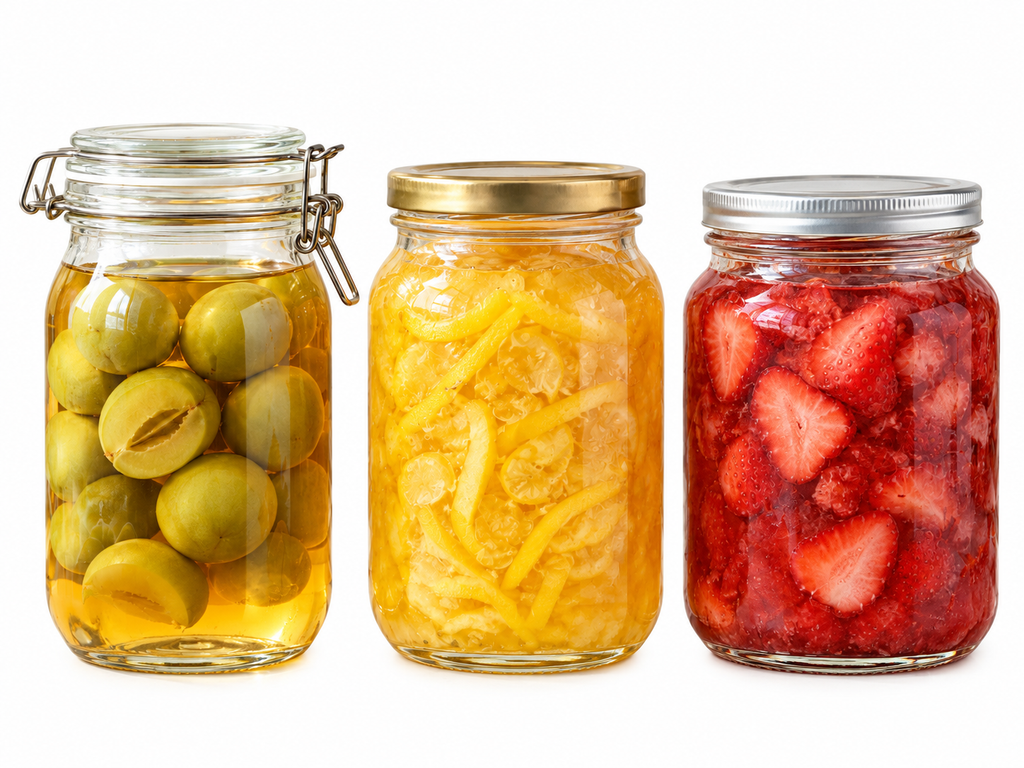
A clear bottle of maesil-cheong, a pulpy jar of yuja-cheong, and a fresh strawberry mixture in a café may all be called cheong even though they do not look or behave exactly alike.
So, Is Cheong a Syrup, Jam or Tea?
Cheong is closest to a sweetened preserve or concentrated syrup base, but neither English term covers every example perfectly.
It can resemble syrup when the fruit liquid has been extracted, look like marmalade when sliced citrus peel remains in the jar, and become a tea-style drink only after it is mixed with water.
| If you see… | What it usually means | Common use |
|---|---|---|
| 매실청 (maesil-cheong) | Sweet-tart green maesil extract or syrup | Cooking, sauces, dressings, hot or cold drinks |
| 유자청 (yuja-cheong) | Sweetened yuja preserve with peel and fruit pieces | Base for yuja-cha, cold drinks and desserts |
| 생강청 (saenggang-cheong) | Sweetened ginger preparation | Hot drinks, cold drinks and sometimes cooking |
| 딸기청 (ttalgi-cheong) | Sweetened strawberry mixture, often pulpy | Ade, milk drinks, desserts and café beverages |
| 오미자청 (omija-cheong) | Concentrated sweetened omija preparation | Water, sparkling drinks and punches |
What Does “Korean Cheong” Actually Mean?
There is no single neat English word for cheong (청).
“Syrup” is often the most practical translation, especially for maesil-cheong, but it can make the product sound smoother and more uniform than it really is.
“Preserve” works better when the jar contains peel or fruit pieces.
“Concentrate” explains how it is used in drinks, but misses the preserving method behind many versions.
At home, cheong is commonly made by combining an ingredient with sugar and allowing the sugar to draw out moisture and flavor.
Some versions rest for days.
Maesil-cheong may be aged for months.
Commercial products can be more complex. Their labels may list water, fructose, thickeners, acidity regulators, or a prepared fruit-and-sugar base in addition to the main ingredient.
So the simplest useful definition is this:
Cheong is a Korean sweetened preparation used as a preserve, drink base, or cooking ingredient.
Cheong vs. Syrup vs. Jam vs. Tea
| Feature | Cheong | Conventional syrup | Jam | Tea |
|---|---|---|---|---|
| Typical texture | Thin syrup to thick, pulpy preserve | Usually pourable and uniform | Thick and spreadable | Finished liquid drink |
| Basic method | Often sugar draws liquid from fruit, roots or herbs; methods vary | Sugar dissolved in liquid, often heated | Fruit cooked with sugar, often until set | Leaves, herbs, fruit or a prepared base infused or diluted in water |
| Fruit pieces | Sometimes | Usually not | Usually crushed or cooked into the spread | Not normally in the finished drink, though some Korean fruit teas contain pieces |
| Mixed with water | Often | Sometimes | Rarely | Already a drink once prepared |
| Used in cooking | Yes, depending on the type | Yes | Occasionally | Less commonly |
| Best English description | Sweetened preserve or syrup-like base | Syrup | Fruit spread | Beverage |
Cheong overlaps with all three categories without being identical to any of them.
A jar of yuja-cheong can look like marmalade, be sold in English as “citron tea,” and function as a drink concentrate.
That is why literal translations get confusing fast.
What Is Maesil-cheong?
Maesil-cheong (매실청) is made from maesil, the fruit of Prunus mume.
English sources often call maesil a Korean green plum, Japanese apricot, or green plum.
None of those is a perfect everyday translation, so keeping the Korean word maesil is often clearer.
A familiar home method combines firm, unripe maesil with sugar.
As the mixture rests, the sugar draws liquid from the fruit, creating a fragrant, amber-colored syrup.
The finished result is usually much more pourable than yuja-cheong and normally does not resemble jam.
Maesil-cheong has two very practical lives in a Korean kitchen.
Mixed with water, it becomes a sweet-tart drink.
Used by the spoonful, it can add sweetness and fruit acidity to marinades, dipping sauces, salad dressings, seasoned vegetable dishes, and other sauces.
That does not mean Korean cooks replace sugar with maesil-cheong in every recipe.
Think of it as another ingredient in the pantry, not a universal shortcut.
How Is Maesil-cheong Used in Korean Cooking?
Maesil-cheong is useful when a recipe needs more than plain sweetness.
Its fruit acidity can round out a soy-based sauce or sharpen a dressing without making the whole thing taste like dessert.
Common uses include:
- Soy-based meat marinades
- Dipping and seasoning sauces
- Salad or vegetable dressings
- Sweet-and-sour mixtures
- Some kimchi and seasoned side-dish recipes
The amount matters.
Maesil-cheong contains sugar, and its acidity and concentration vary by product or homemade batch.
If a recipe specifically calls for maesil-cheong, follow that recipe rather than replacing every spoonful of sugar on instinct.
You will sometimes see big claims about maesil-cheong tenderizing meat or offering specific health benefits.
For shopping and cooking purposes, it is safer to think of it simply as a sweet-tart flavor ingredient.
What Is Yuja-cheong?
Yuja-cheong (유자청) is a sweetened preserve made with yuja, the Korean name for the aromatic citrus commonly called yuzu in English.
Thin slices of peel and pieces of fruit often remain in the jar, which is why it can look more like marmalade than syrup.
Recipes and products vary.
Sugar is common, and some versions also contain honey.
A commercial jar may include a sweetened yuja preparation plus extra sweeteners, water, stabilizers, or acidity regulators.
The ingredient list tells you more than the picture on the front.
You will often see yuja products translated as “citron tea” or “honey citron tea.”
That is an established retail name, but it is not a precise botanical translation.
Yuja is Citrus × junos.
True citron is Citrus medica.
For shopping purposes, though, a Korean jar labeled “citron tea” will usually point you toward a yuja-based sweet preserve meant to be mixed with water.
Yuja-cheong vs. Yuja-cha: What’s the Difference?
The difference is simple once you separate the jar from the cup.
- Yuja-cheong is the sweetened preserve or drink base in the jar.
- Yuja-cha is the prepared drink, usually made by stirring yuja-cheong into hot water.
Cold water or sparkling water can also be used, although a café may call the sparkling version a yuja ade rather than yuja-cha.
The English label creates most of the confusion.
When a supermarket jar says “Citron Tea,” it may not contain brewed tea or tea leaves at all.
It contains the concentrated, spoonable base used to make the drink.
Think of it as yuja tea base, even if those exact words are not printed on the label.
Other Types of Cheong You May See in Korea
| Korean name | Romanization | Main ingredient | Typical form | Common use | Better described as |
|---|---|---|---|---|---|
| 생강청 | Saenggang-cheong | Ginger | Thick, grated or syrupy | Hot drinks, cold drinks, some cooking | Both home-style and commercial |
| 오미자청 | Omija-cheong | Omija berries (Schisandra chinensis) | Concentrated red syrup | Water, sparkling drinks, punch | Both traditional-use and modern beverage base |
| 모과청 | Mogwa-cheong | Chinese quince | Sliced preserve or syrup | Hot-water drink, sauces | Long-established home-style preparation |
| 딸기청 | Ttalgi-cheong | Strawberry | Bright, pulpy mixture | Ade, strawberry milk, desserts | Especially common in modern cafés and home café recipes |
| 레몬청 | Lemon-cheong | Lemon | Sliced citrus preserve | Hot drink, iced tea, ade | Modern household and café favorite |
| 자몽청 | Jamong-cheong | Grapefruit | Pulpy citrus preserve | Ade and iced drinks | Strongly associated with contemporary café menus |
These categories overlap.
Lemon-cheong did not suddenly appear when cafés discovered glass jars, and older ingredients can still show up in very modern drinks.
This table is about where travelers are likely to notice them today, not about drawing a perfect historical line.
Traditional Cheong vs. Modern Café Cheong
Maesil, yuja, ginger, omija, and mogwa have long-established roles in Korean home drinks or pantry use.
Modern cafés have taken the same broad idea—fruit held with sugar and used as a concentrated base—and made it faster, brighter, and more seasonal.
That is where strawberry, grapefruit, lemon, blueberry, and other fresh-fruit cheong often show up.
A café may spoon the fruit mixture into sparkling water, milk, iced tea, or a dessert drink.
The mixture may rest for only a short time and stay refrigerated rather than aging for months like a household jar of maesil-cheong.
Cheong has also started appearing more often in English-language food media.
Bon Appétit covered tomato cheong in 2025, and fruit-cheong recipes have continued to spread online since then.
Just keep one thing in mind:
A trendy strawberry or tomato version on social media does not automatically make it an old Korean household classic.
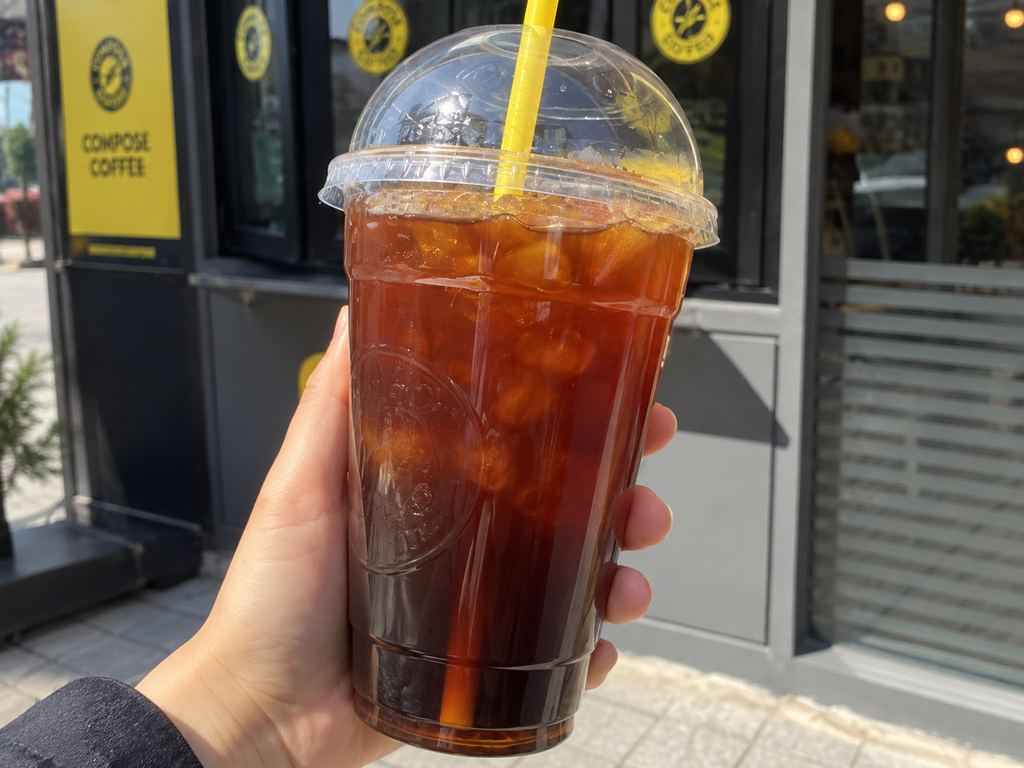
How Is Cheong Used in Korean Drinks?
The jar is usually a concentrate, not a ready-to-drink serving.
Common ways to use it include:
- Stirring it into hot water for a tea-style drink
- Mixing it with cold water and ice
- Adding sparkling water for an ade
- Combining strawberry cheong with milk
- Using a small amount in iced tea, punch, or a café dessert drink
There is no universal dilution ratio.
A pulpy yuja product, a concentrated maesil liquid, and fresh strawberry cheong can have very different sugar levels and textures.
Start with the package directions or a modest spoonful, then adjust.
How Do Koreans Make Cheong at Home?
The basic idea is simple.
Clean and dry the main ingredient, combine it with sugar or another specified sweetener, and give it time for liquid and flavor to come out.
The actual method is not one-size-fits-all.
Fresh strawberry cheong may be refrigerated and used relatively quickly.
Maesil-cheong is commonly prepared for a much longer rest.
Citrus versions may keep the sliced peel.
The fruit-to-sugar ratio, temperature, resting time, straining, and storage can all change the result.
There is no one sugar ratio or resting time that safely works for every fruit and every storage method.
If you want to make cheong at home, use a tested recipe and follow its storage instructions rather than copying one ratio across every ingredient.
Is Cheong Fermented?
Not necessarily.
This is where English explanations often get a little too simple.
Sugar can draw liquid and flavor out of fruit without fermentation happening at all.
Some long-aged maesil preparations can develop measurable fermentation activity, and research papers do study maesil sugar syrup as a fermented product.
A quick refrigerated strawberry cheong, however, should not automatically be described as the same type of fermented food.
The safer way to think about it is this:
Cheong is often macerated or aged, while fermentation depends on the ingredient, method, time, temperature, and microbial activity.
The word cheong by itself does not prove fermentation.
What Does Cheong Taste Like?
Taste depends more on the ingredient and the recipe than on the word cheong itself.
- Maesil-cheong: sweet, tart, fragrant and usually clean rather than pulpy
- Yuja-cheong: sweet and very citrusy, with mild bitterness from the peel
- Saenggang-cheong: sweet with a warm, sharp ginger character
- Ttalgi-cheong: sweet, fruity and pulpy
- Omija-cheong: fruity and tart, with the complex character associated with omija
Commercial products may taste sweeter or more uniform than a simple homemade fruit-and-sugar version because the formula can include additional sweeteners, water, acid, or texture stabilizers.
Where Can Tourists Buy Cheong in Korea?
The easiest place is usually a large supermarket such as E-Mart, Lotte Mart, or Homeplus.
Look in the tea aisle, traditional-drink section, syrup area, or near the honey.
Do not automatically head to the jam shelf.
Department-store food halls, traditional markets, local-food shops, and souvenir stores may also carry regional or gift-style versions.
Fresh café cheong is a different story.
Some cafés sell jars, but many use the mixture only behind the counter.
For travelers, supermarkets are usually the simplest option because the label gives you the ingredients, net weight, storage instructions, and use-by date.
If you are also shopping for the fruit itself, our guide to Korean seasonal fruits in September explains what you are likely to see during an early-fall trip.
The glamorous market jar is less useful if you cannot work out what is in it or how you are supposed to store it.
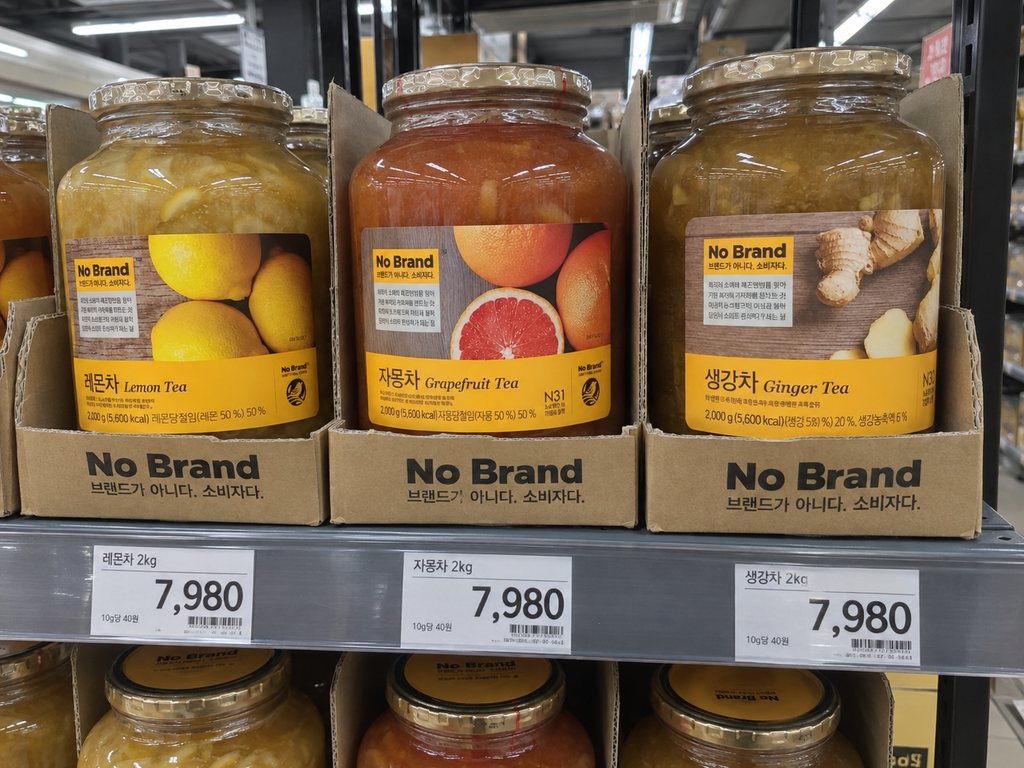
What Should You Look for on the Label?
| Korean label | Meaning | Why it matters |
|---|---|---|
| 매실청 | Maesil-cheong | Cooking and drink syrup made with maesil |
| 유자청 | Yuja-cheong | Sweetened yuja preserve or drink base |
| 생강청 | Ginger cheong | Ginger-based preparation |
| 과일청 | Fruit cheong | Broad category; check the exact fruit |
| 액상차 | Liquid tea | Korean legal or product category often used for jarred drink bases |
| 원재료명 | Ingredients | Shows fruit content, sweeteners and additives |
| 내용량 | Net weight | Similar jars can differ greatly in size |
| 당류 | Sugars | Check the nutrition panel rather than assuming “fruit” means low sugar |
| 원액 | Concentrate or base | Usually intended for dilution or use as an ingredient |
| 희석 | Dilute | Look nearby for a suggested mixing method |
| 보관방법 | Storage instructions | Follow the package, especially after opening |
| 개봉 후 냉장보관 | Refrigerate after opening | Do not leave the opened jar in a hotel room |
| 소비기한 | Use-by date | Check before buying a large jar |
Start with 원재료명.
Two jars that both say “yuja tea” on the front can contain different percentages of yuja and different combinations of sugar, honey, fructose, water, or stabilizers.
Buying Yuja Tea Base Outside Korea
For the spoonable version described here, look for a Korean jar labeled “honey citron tea” or “yuja tea base,” then confirm the ingredients and preparation directions. Tea bags, bottled drinks and a smooth yuzu syrup are different formats. A single-serve stick can be convenient, but check that it contains the drink base you want.
Choose the size you will actually use. A one-kilogram jar takes up fridge space after opening, while a smaller jar or portion pack may suit an occasional cup. Compare fruit content, sweeteners and delivered cost by weight. Follow the storage directions on that exact package rather than treating every cheong as the same product.
This section contains affiliate links. If you buy through them, Must Buy Korea may earn a commission at no additional cost to you. As an Amazon Associate I earn from qualifying purchases.
Looking for a spoonable yuja drink base? Check OTTOGI Honey Citron Tea availability on Amazon. Compare the jar size, ingredients and storage directions, and check the current seller and shipping options for your delivery address.
Why Does a Jar of Yuja “Tea” Look Like Marmalade?
Because you are looking at the base, not the finished cup.
The sliced peel and fruit are preserved in a sweet mixture.
Spoon some into hot water and the liquid becomes yuja-cha, while pieces of peel float in the cup.
The English front label skips that middle step and simply calls the jar “Citron Tea.”
It is closer to a jar of concentrated fruit preserve for making tea than to tea bags or a bottled ready-to-drink tea.
You could spread some versions on toast if the product suits that use.
But that is not why it is usually sitting in the Korean tea aisle.
How Much Does Cheong Cost in Korea?
These are current official online-store examples, not a ranking.
A supermarket branch may charge a different price or run a promotion.
| Exact product listing | Type | Size | Checked price | Source | Last verified |
|---|---|---|---|---|---|
| 오뚜기 매실청 | Maesil-cheong | 660 g | ₩5,980 (about US$4.30) | Ottogi Mall | Sep. 18, 2026 |
| 꽃샘 꿀유자차 | Honey yuja tea base | 1 kg | ₩7,900 (about US$5.70) | Kkotsem official shop | Sep. 18, 2026 |
| 오뚜기 꿀생강차 | Honey ginger tea base | 1 kg | ₩10,780 (about US$7.80) | Ottogi Mall | Sep. 18, 2026 |
USD conversions use roughly ₩1,380 to US$1 and are only a guide.
Exchange rates, promotions, shipping charges, and in-store prices can all change.
Homemade vs. Commercial Cheong
| Question | Homemade | Commercial |
|---|---|---|
| Ingredients | Can be as simple as fruit and sugar | May include a prepared fruit base, several sweeteners, water, acid or stabilizers |
| Texture | Changes by recipe and resting time | Usually designed for consistent texture and flavor |
| Storage | Depends on the method and handling | Follow printed unopened and after-opening instructions |
| Flavor | Can vary by fruit ripeness and batch | More standardized |
| Label information | Usually none unless the maker records it | Ingredients, nutrition, weight and use-by date are printed |
“Homemade” is not automatically better, more traditional, safer, or lower in sugar.
And “commercial” does not automatically mean artificial.
Read the recipe or the label instead.
Can You Take Cheong Home From Korea?
Usually, the practical problem is luggage rather than cheong itself.
The jars are heavy, often made of glass, and contain a liquid or gel-like food.
For cabin baggage, airport security may treat cheong like a liquid, gel, paste, jam, or preserve.
Under systems that use the common 100 ml / 3.4 oz cabin-liquid limit, a typical 500 g or 1 kg jar is not going into your liquids bag.
Checked baggage is usually more practical.
Seal the lid, place the jar in a leakproof bag, and cushion the glass.
Food-import rules are a separate issue.
Those depend on your destination country, not the Korean supermarket.
Rules can vary by ingredient and processing method, so check your destination’s official customs or agricultural authority before buying a large jar to take home.
Cheong vs. Korean Fruit Tea Bags
A tea bag contains dried tea, fruit, peel, herbs, or flavoring intended to infuse in water.
Cheong is a spoonable or pourable preserve or base that mixes directly into the drink and may leave fruit pieces behind.
For a lightweight souvenir, tea bags are much easier.
For the pulpy yuja-cha served in many Korean homes and cafés, the jarred base gives you that characteristic texture.
Useful Korean Words
| Korean | Romanization | English |
|---|---|---|
| 청 | cheong | Sweetened preserve or syrup-like base |
| 매실 | maesil | Korean green plum / Prunus mume fruit |
| 매실청 | maesil-cheong | Maesil syrup or extract |
| 유자 | yuja | Yuja, commonly called yuzu in English |
| 유자청 | yuja-cheong | Sweetened yuja preserve |
| 유자차 | yuja-cha | Prepared yuja tea-style drink |
| 생강청 | saenggang-cheong | Ginger cheong |
| 오미자청 | omija-cheong | Omija cheong |
| 과일청 | gwail-cheong | Fruit cheong |
| 차 | cha | Tea or tea-style drink |
| 에이드 | eideu | Ade, usually a cold sparkling fruit drink |
| 탄산수 | tansansu | Sparkling water |
| 원액 | wonaek | Concentrate or base |
| 희석 | huiseok | Dilution / dilute |
| 개봉 후 냉장보관 | — | Refrigerate after opening |
이거 물에 타서 먹는 거예요?
Igeo mure taseo meongneun geoyeyo?
Do you mix this with water?
이건 청이에요, 차예요?
Igeon cheong-ieyo, cha-yeyo?
Is this cheong or tea?
매실청 어디 있어요?
Maesil-cheong eodi isseoyo?
Where can I find maesil-cheong?
Common Misunderstandings About Cheong
“Cheong is Korean tea.”
Not quite.
Some cheong becomes a tea-style drink after dilution, but the jar itself is the base or preserve.
“All cheong is fermented.”
No.
Maceration and aging are not automatically the same thing as fermentation.
It depends on the process.
“Yuja-cheong and yuja-cha are identical.”
They are connected, but not identical.
One is the base.
The other is the drink.
“Citron tea comes in tea bags.”
Sometimes fruit-flavored tea does.
But the familiar Korean jar labeled “Citron Tea” usually contains a spoonable yuja base.
“Every cheong is an old traditional recipe.”
No.
Contemporary cafés also use the idea for strawberries, grapefruit, lemon, and other seasonal fruit mixtures.
“Cheong is only for drinks.”
Not at all.
Maesil-cheong in particular also shows up in sauces, marinades, dressings, and seasoning mixtures.
“Maesil-cheong is plum jam.”
Usually not.
It is generally a pourable extract or syrup rather than a spreadable jam.
“Every commercial jar uses the same ratio.”
No.
Fruit content, sweeteners, water, texture agents, and recommended dilution can vary quite a lot.
Is Cheong Worth Trying in Korea?
Yes, especially if you want to understand one of those Korean pantry ingredients that quietly connects home cooking, winter drinks, supermarket tea aisles, and modern café ades.
You do not need to buy a one-kilogram jar just to figure out what it is.
Order a yuja-cha.
Try a fruit ade from a café that actually identifies its cheong.
Or just pick up a supermarket jar and read the label.
The goal is not finding the “best” syrup.
It is finally understanding why something can say tea on the front, look like marmalade in the jar, and behave like a concentrate when you use it.
FAQ
What is Korean cheong?
Korean cheong is a sweetened preserve or syrup-like preparation made with fruit, roots, herbs, or other ingredients.
It can be used as a drink base, preserve, sweetener, or cooking ingredient.
Is cheong a syrup?
Syrup is often the easiest English translation, especially for maesil-cheong.
Some cheong is pulpy or contains sliced peel, so “sweetened preserve” may sometimes be more accurate.
Is cheong the same as jam?
No.
Jam is normally cooked and spreadable.
Some thick citrus cheong resembles marmalade, but many varieties are meant for dilution or cooking rather than spreading.
Is cheong fermented?
Not necessarily.
Sugar can extract liquid without fermentation happening.
Some long-aged preparations can develop microbial activity, but not every cheong should be labeled fermented.
What is maesil-cheong?
It is a sweet-tart liquid made by resting maesil, or Prunus mume fruit, with sugar.
It is used in drinks as well as Korean sauces, marinades, and dressings.
What is yuja-cheong?
Yuja-cheong is a sweetened yuja preserve that usually contains peel and fruit pieces.
It is commonly mixed with water to make yuja-cha.
What is the difference between yuja-cheong and yuja-cha?
Yuja-cheong is the concentrated jarred base.
Yuja-cha is the drink made after that base is mixed with hot water.
Why is yuja-cheong called citron tea?
“Citron Tea” is a common export and retail label for the jarred base used to make yuja-cha.
It is a market translation, not a sign that the jar contains brewed tea leaves.
How do Koreans use maesil-cheong?
It may be diluted into a drink or added in measured amounts to marinades, dipping sauces, dressings, and seasoning mixtures.
Usage varies by household and recipe.
Can you drink cheong directly?
Most cheong is concentrated and sweet, so it is usually diluted or used by the spoonful.
Follow the product directions rather than drinking a large amount straight from the jar.
Where can I buy cheong in Korea?
Large supermarkets, department-store food halls, markets, local-food shops, and some souvenir stores carry it.
In a supermarket, check the liquid-tea, honey, or drink-base aisle.
Does cheong need to be refrigerated?
It depends on the product and whether it has been opened.
Many commercial jars say “refrigerate after opening,” so follow the exact label.
Can tourists take cheong home?
Possibly.
Large jars are usually more practical in checked baggage because they are liquid or gel-like.
Check airline security rules and the food-import rules of your destination before packing one.
What other types of cheong are common?
Ginger, omija, mogwa, strawberry, lemon, and grapefruit versions are easy to encounter.
Their textures, histories, and uses are not identical.
Sources & Last Updated
- Maangchi: Green plum extract (maesil-cheong) — sugar extraction and culinary use
- My Korean Kitchen: Yuja tea — relationship between yuja-cheong and the prepared drink
- Korean Bapsang: Doenjang-marinated pork — use of maesil-cheong in a marinade
- 2024 Foods study on long-aged maesil sugar syrup — fermentation research specific to maesil preparations
- Bon Appétit: Tomato cheong — recent English-language interest in cheong
- Ottogi Mall — current official-store examples for 매실청 660G and 꿀생강차 1KG
- Kkotsem official shop: 꽃샘 꿀유자차 1kg — official product details, ingredients and price
- TSA liquids rule — U.S. cabin-baggage liquid and gel guidance; travelers should check their own departure and destination rules
- Kew Science: Citrus medica — botanical distinction behind the English word “citron”
Product formulas, packaging, prices, availability, exchange rates, storage directions, airline rules, and import requirements can change.
Read the current label and check the relevant official travel authority before purchase or packing.
Product / Price Information Checked: September 18, 2026
Last Updated: September 27, 2026