
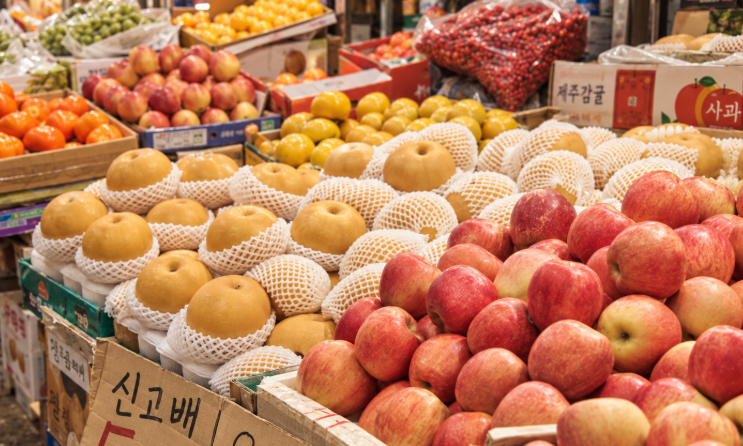
Korean seasonal fruits are especially good in September, when pears, new-season apples, and grapes are easy to find across Korea.
That distinction matters. A supermarket can sell imported cherries, stored citrus, and greenhouse fruit in September, but a full shelf does not automatically mean “in season.” If you want a simple three-fruit sample of early Korean autumn, buy a pear, a pack of Hongro apples, and whichever local grapes look best that day.
Quick Answer: Which Korean Seasonal Fruits Should You Try in September?
September is a great month for fruit in Korea. The easiest seasonal picks are Korean pears, new-season apples, and Korean-grown grapes.
If you want something especially easy to eat while traveling, Shine Muscat is a good choice. It is widely grown and sold in Korea, although the variety itself was originally developed in Japan.
| Fruit | Korean Name | September Status | What It Tastes Like | Where to Buy |
|---|---|---|---|---|
| Korean pear | 배 (bae) | IN SEASON | Crisp, very juicy, mildly sweet | Supermarkets, fruit shops, traditional markets |
| Apple | 사과 (sagwa) | IN SEASON | Crisp and sweet to sweet-tart | Supermarkets and fruit shops |
| Korean grapes | 포도 (podo) | IN SEASON | Sweet and juicy; flavor varies by variety | Supermarkets, markets, fruit shops |
| Shine Muscat | 샤인머스캣 | IN SEASON | Sweet, crisp, floral | Supermarkets and fruit shops |
| Fresh jujube | 생대추 (saeng-daechu) | EARLY SEASON | Crisp, lightly sweet, almost apple-like | Traditional markets and fruit shops |
| Peach | 복숭아 (boksunga) | LATE SEASON | Juicy and fragrant | Larger supermarkets and fruit shops |
| Sweet persimmon | 단감 (dangam) | EARLY SEASON | Mildly sweet and crisp when firm | Markets and supermarkets, especially later in September |
If you only want to try three, keep it simple: buy one Korean pear, a small pack of apples, and some Korean grapes. That gives you an easy taste of early autumn in Korea without overthinking it.
Availability can vary by store, region, and the week of your visit, so check what looks freshest when you shop.
1. Korean Pear (배): The September Fruit That Feels Most Different
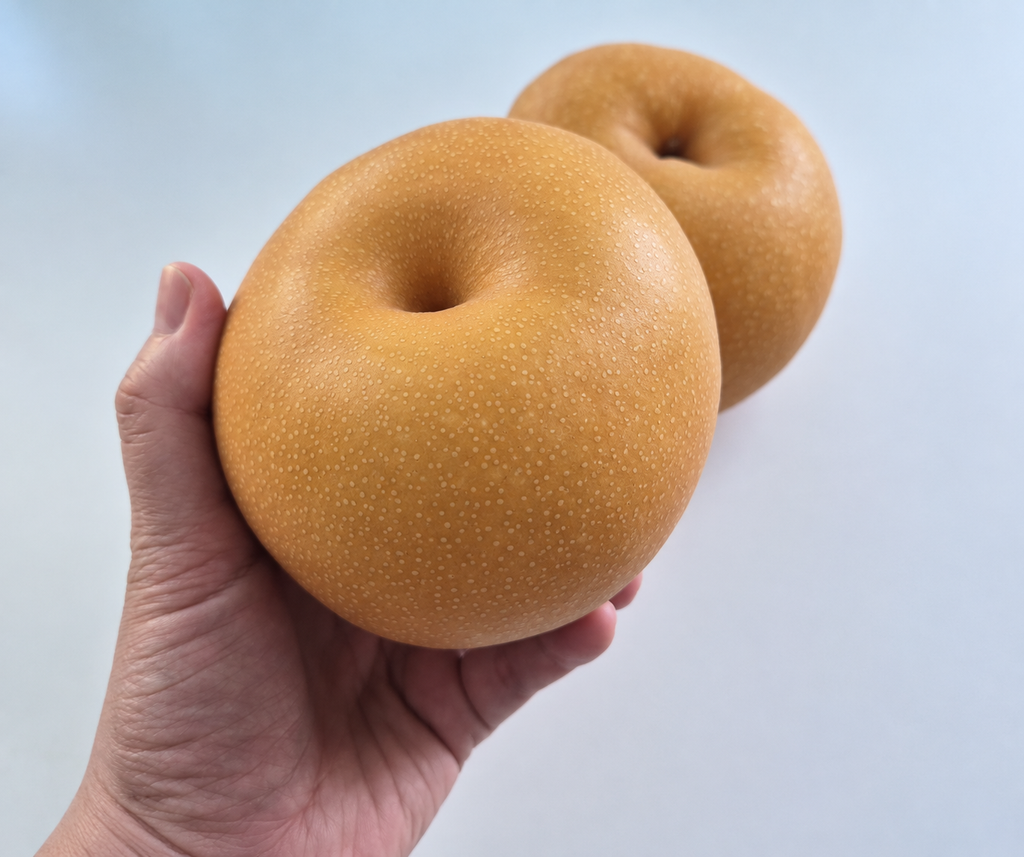
A Korean pear is round, usually tan or golden-brown, and often much larger than the pears many travelers are used to. The biggest surprise is the texture: it is firm, crisp, very juicy, and mildly sweet.
September is one of the best times to find Korean pears, and they become especially noticeable around Chuseok, when supermarkets and fruit shops fill up with neatly packed gift boxes.
If you are traveling, you do not need the fancy box. One pear or a small pack is enough to try.
The only downside is size. Korean pears can be quite large and are easier to eat with a knife, so a pre-cut fruit cup may be more convenient if you are staying in a hotel.
2. Korean Apples (사과): Easy to Find in September
September is a good time to find new-season Korean apples. Hongro is one of the names you may notice often around Chuseok, but you do not need to memorize every variety.
For a simple snack, choose apples that feel firm and have no deep dents, broken skin, or leaking spots.
If you are traveling alone, look for a small pack or ask a neighborhood fruit shop whether they sell apples individually.
3. Korean Grapes (포도): One Category, Very Different Eating Styles
September is one of the easiest months to compare Korean grapes. You may see purple Campbell Early grapes, very large Kyoho-type grapes, and green Shine Muscat sitting a few feet apart. They do not eat the same way.
Campbell Early has a strong grape aroma and a sweet-tart flavor. Its skin slips away from the flesh, and seeds may be present. Many people squeeze the pulp into the mouth and discard the skin and seeds. Kyoho-type grapes are large and juicy, but seedless status varies by product. Never assume from color alone—look for 씨없음 or 무핵, both indicating seedless fruit.
The stem gives you a useful freshness clue. Look for firm berries that are still well attached, without wet leakage or widespread shriveling. A little pale bloom on the skin can be a natural waxy coating, not dirt or mold.
4. Shine Muscat (샤인머스캣): Easy to Eat, Easy to Overpay For
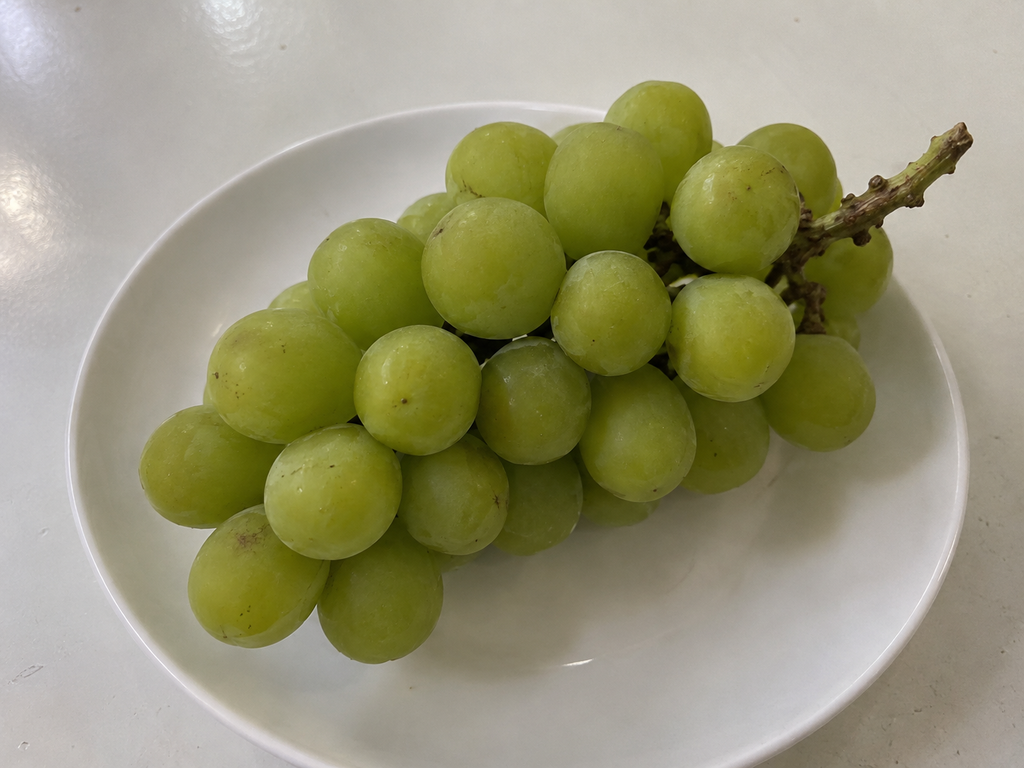
Shine Muscat is a Japanese-developed grape cultivar that became widely cultivated and popular in Korea. Korean-grown bunches are now a familiar sight in September supermarkets, fruit shops, and Chuseok gift displays.
The appeal is obvious. The berries are usually crisp, sweet, aromatic, and sold as seedless grapes with thin edible skin. Still, check the pack rather than treating “usually” as a guarantee. Quality and sweetness vary with grower, grade, and ripeness.
Shine Muscat can range from reasonably priced everyday packs to expensive gift boxes, so compare the size and price before buying.
For a traveler, the smallest good-looking bunch is usually the smart buy. A large gift box looks impressive but takes up fridge space and is awkward to carry around Seoul.
5. Fresh Jujube (생대추): Interesting, but Not a Guaranteed Find
Fresh jujube is very different from the wrinkled dried jujube used in teas and cooking. When fresh, it has a clean snap and a lightly sweet, apple-like crunch. The Korean word to look for is 생대추, meaning fresh jujube.
In September, treat it as an early or limited find rather than a core supermarket promise. Availability tends to improve as autumn progresses and may be better at traditional markets, neighborhood fruit stores, or shops carrying produce from jujube-growing regions. If all you see is dried fruit, do not assume you missed the “fresh” version on the same shelf—they are sold as different products.
6. Late-Season Peaches (복숭아): Buy Them When They Look Good
Peaches can still be sold in September, but they are nearing the end of their main season. July and August are the more dependable peach months, so September selection can change quickly.
Choose peaches with intact skin and no leaking or deep bruises. Fragrance can help, but a perfectly ripe peach is a bad backpack fruit. Buy it close to the time you plan to eat it, and do not bury it beneath bottled water and shopping bags.
7. Early Persimmons (감): A Preview of October
Firm sweet persimmons, called 단감, can start appearing in September, especially later in the month. However, October is generally a better time to find a wider selection.
A firm sweet persimmon has a crisp bite and gentle sweetness. If you are not sure whether it is ready to eat, ask: 지금 먹기 좋아요? — “Is this ready to eat now?”
Any Other September Fruits Worth Noticing?
You will see more fruit than this list covers. Melons, greenhouse tangerines, imported fruit, and premium mixed boxes may all be on sale.
For a simple September fruit list, however, pears, new-season apples, and grapes are still the easiest choices to recommend to travelers.
What Does Korean Fruit Taste Like?
| Fruit | Typical Taste | Typical Texture | The Catch |
|---|---|---|---|
| Korean pear | Mildly sweet, clean | Very crisp and juicy | Large; usually needs cutting |
| Hongro apple | Sweet with some acidity | Crisp | Variety and storage affect flavor |
| Campbell Early grape | Fragrant, sweet-tart | Soft, juicy pulp | Skin is often discarded; seeds may occur |
| Shine Muscat | Sweet, floral, muscat-like | Crisp | Quality varies; premium packs can be expensive |
| Fresh jujube | Lightly sweet | Firm, apple-like crunch | Harder to find early in September |
| Sweet persimmon | Mild, honeyed sweetness | Crisp when firm | September is early; confirm it is ready to eat |
Where to Buy Fruit in Seoul
These Korean seasonal fruits are easy to find at supermarkets, neighborhood fruit shops, and traditional markets in September.
Neighborhood Fruit Shops
For one or two pieces, these are often the most useful option. A small fruit shop may sell individual pears, apples, or persimmons and can tell you what is ready to eat. Price signs and English support vary, so use the Korean phrases below or a translation app.
Large Supermarkets
Emart and Lotte Mart are convenient for visible labels, card payment, origin information, and packaged quantities. Larger branches generally provide a broader range than compact urban branches. During Chuseok season, expect a lot of shelf space to go to gift boxes.
Traditional Markets
Namdaemun Market and neighborhood markets can be useful, but do not go to a famous market solely because you assume fruit will be cheapest. Selection depends on the market and the individual vendor.
Department Store Food Halls
This is where presentation becomes part of the product. You will find premium grades, polished gift packaging, and staff-assisted service—usually at a higher price. It is useful for understanding Korean gift culture, less useful for buying one apple before a museum visit.
Convenience Stores
Some branches sell bananas, cups of cut fruit, or a few packaged items. Stock is too inconsistent to make a Korean convenience store your main fruit plan, but it can solve the hotel-knife problem.
Prices vary a lot by fruit, grade, package size, and whether you are buying a regular pack or a Chuseok gift set.
Traditional Market vs. Supermarket: Which Is Better?
| Shopping Factor | Traditional Market | Large Supermarket |
|---|---|---|
| Selection | Strong local and seasonal selection at some vendors; uneven by market | More standardized and easier to scan |
| Price visibility | May be clear, handwritten, or absent | Usually clearly labeled |
| Small quantities | Often possible, but ask first | Depends on packaging and branch |
| Gift boxes | Available around Chuseok | Widely available with formal packaging |
| English convenience | Varies widely | Product labels are still mostly Korean, but checkout is straightforward |
| Card payment | Common at many stalls, not universal | Standard |
| Quality consistency | Vendor-dependent | Grading and packaging are easier to compare |
| Best for | Conversation, seasonal discovery, flexible quantities | Fast, low-friction shopping and price comparison |
Neither side is always cheaper. Compare the variety, origin, grade, and weight—not just the number on the sign.
Why Are There So Many Fruit Gift Boxes in September?
Chuseok falls on Friday, September 25, 2026. The official holiday runs from September 24 to 26, with Sunday extending the break through September 27.
Fruit is one of several common Chuseok gift categories. Apples and pears arrive at a useful harvest window, hold their shape during transport, and can be graded into visually consistent sets. Grapes also appear in mixed and premium gift boxes.
This does not mean every Korean family buys expensive fruit. It means retailers prepare large seasonal displays because fruit may be sent to relatives, clients, or colleagues.
If you only want something to eat during your trip, skip the formal gift box and buy individual fruit or a regular pack instead.
How to Choose Good Fruit Without Becoming a Produce Expert
Korean pear: Choose one that feels heavy for its size, with firm skin and no wet spots or deep bruises. Brown speckling can be normal; damage that is soft or leaking is not.
Apple: Look for firm fruit with intact skin. Check the variety name because sweetness and acidity differ.
Grapes: Choose firm berries attached to a reasonably fresh-looking stem. Avoid packs with many crushed, leaking, or shriveled grapes.
Peach: Avoid deep bruises and splits. If it is already very soft, eat it soon and carry it carefully.
Sweet persimmon: Firmness is fine when buying crisp 단감. If you are looking at a different persimmon type, ask whether it is ready to eat rather than guessing.
Can You Buy Just One Piece?
Sometimes. Neighborhood fruit shops and market vendors may sell fruit individually, and some supermarkets display single pieces. Other stores prepack everything. Ask 한 개만 살 수 있어요? — “Can I buy just one?”
For travel, one pear, two apples, or the smallest grape pack usually makes more sense than a gift box. Pre-cut fruit is even easier if you are moving hotels, taking the KTX, or staying somewhere without a knife.
Can You Take Korean Fruit Home on a Plane?
Do not assume that fresh fruit can be packed in your luggage. Import rules depend on your destination, the type of fruit, and its country of origin.
For travelers entering the United States, USDA APHIS states that almost all fresh fruits and vegetables are prohibited and that agricultural products must be declared. Check your destination country’s customs or agricultural authority before traveling. Eating the fruit in Korea is usually the simplest option.
Useful Korean Words for Buying Fruit
| Korean | Pronunciation | Meaning |
|---|---|---|
| 과일 | gwa-il | fruit |
| 배 | bae | Korean pear |
| 사과 | sagwa | apple |
| 포도 | podo | grape |
| 샤인머스캣 | syain-meoseukaet | Shine Muscat |
| 생대추 | saeng-daechu | fresh jujube |
| 복숭아 | boksunga | peach |
| 단감 | dangam | sweet persimmon |
| 한 개 | han gae | one piece |
| 한 팩 | han paek | one pack |
| 제철 | jecheol | in season |
| 선물세트 | seonmul seteu | gift set |
| 얼마예요? | eolmayeyo? | How much is it? |
Useful sentences:
- 한 개만 살 수 있어요? — Can I buy just one?
- 이거 제철이에요? — Is this in season?
- 지금 먹기 좋아요? — Is this ready to eat now?
- 씨 있어요? — Does it have seeds?
If You Only Buy Three Fruits
Choose these three for a practical September sampler:
- Korean pear: Its crisp, juicy texture is noticeably different from many European and American pear varieties.
- A new-season apple such as Hongro: It is portable, widely available, and closely associated with Korea’s September fruit market.
- Korean grapes: Choose Campbell Early for a more old-school Korean grape experience or Shine Muscat for an easier skin-on snack.
This is not a ranking. It is a practical selection based on seasonality, availability, and ease of eating while traveling.
FAQ
What fruits are in season in Korea in September?
Korean pears, new-season apples, and several grape varieties are the most dependable September choices. Peaches are late-season, while fresh jujubes and sweet persimmons are early or limited finds.
Is Korean pear in season in September?
Yes. September is an important harvest and shipping period for Korean pears, particularly around Chuseok. Exact timing differs by variety and growing region.
Are apples in season in Korea in September?
Yes. New-season apples such as Hongro appear in September. Check the variety label because sweetness and acidity differ.
Is Shine Muscat in season in Korea in September?
Yes. Korean-grown Shine Muscat is widely sold during September. However, Shine Muscat is a Japanese-developed cultivar that is now extensively grown in Korea.
Can I buy fresh jujube in September?
Possibly, especially later in the month. Look for 생대추 at traditional markets, neighborhood fruit shops, and larger supermarket produce sections.
Are peaches still available in Korea in September?
Some late-season peaches may still be available, but September selection is less dependable than in July or August.
When does persimmon season begin in Korea?
Early sweet-persimmon varieties can appear in September. A wider selection is generally available later in autumn.
Where should tourists buy fruit in Seoul?
Neighborhood fruit shops are useful for individual pieces, while large supermarkets make labels, prices, and card payment easier. Traditional-market selection varies by vendor, so markets are not automatically cheaper.
Can I bring Korean fruit back to the United States?
Do not plan on bringing fresh fruit unless current U.S. regulations explicitly permit it. USDA APHIS says almost all fresh fruits and vegetables are prohibited, and agricultural products must be declared.
Sources & Last Updated
- Korea Rural Economic Institute Agricultural Outlook Center — Fruit, September 2026
- Korea AeroSpace Administration — Official 2026 Calendar and Chuseok Dates
- USDA APHIS — International Traveler Rules for Fruits and Vegetables
Last updated: September 16, 2026.
Harvest timing, prices, promotions, and store inventory can change by region and retailer. Check the product label and current store information when you shop.