
A jjimjilbang vs spa comparison starts with one basic difference: a Korean jjimjilbang is not simply a Western-style spa with a Korean name. It usually combines gender-separated bathing facilities with shared heated rooms, casual rest areas, and often food or other leisure facilities.
The bath area and the shared jjimjil area also follow different clothing rules. You are generally unclothed in the gender-separated bath area, then change into the facility’s T-shirt-and-shorts set before entering the mixed-gender common space. That sounds more complicated than it feels once you are inside.
Just do not assume every place is open all night, serves the same food, or includes massage. Current Seoul facilities range from traditional charcoal-kiln venues to urban leisure complexes and neighborhood bathhouses with limited jjimjil space.
What Changes Between a Jjimjilbang, Bathhouse and Spa?
| Question | Practical Answer |
|---|---|
| Is a jjimjilbang a luxury spa? | Usually no. It is closer to a bathhouse, heated-room complex, and casual rest space combined. |
| Are the baths separated by gender? | Generally yes. Follow the signs and the facility’s instructions. |
| Do you have to be unclothed? | Usually in the communal bath area. You wear provided clothes in the shared jjimjil area. |
| Is food included? | Usually not. Food and drinks are normally separate purchases where available. |
| Are massage and body scrubs included? | Usually separate paid services, if offered. |
| Can you sleep there? | Some facilities permit overnight use, but many do not. Check current hours and policy. |
| Are all jjimjilbangs open 24 hours? | No. Several current Seoul examples close in the evening. |
| Can foreign tourists visit? | Generally yes, but language support and individual policies vary. |
What Is a Jjimjilbang?
The word jjimjilbang (찜질방) refers to a Korean heated-room and relaxation facility, often attached to a public bath. Jjimjil relates to warming or heat-based bathing, while bang means room.
In practice, the experience may include hot and cold baths, showers, dry heated rooms, a cooler room, floor seating, reclining chairs, television, snack counters, or simple restaurants. Larger complexes may add children’s areas, entertainment, or premium rest zones. Small neighborhood facilities may offer far less.
Calling it a “Korean sauna” is convenient, but incomplete. A sauna is one part of the experience. The shared lounging, food, and bathhouse culture are what make a jjimjilbang feel different.
What Is a Korean Public Bathhouse?
A Korean public bathhouse is commonly called a mokyoktang (목욕탕). Its main job is bathing: showers, hot and cold pools, and sometimes wet or dry sauna rooms inside a gender-separated area.
A jjimjilbang usually adds a clothed, shared section with heated rooms and places to rest. The categories overlap because many businesses operate both under one roof. A sign saying sauna may refer mostly to the bathhouse, while another place using the same word may have a full jjimjil floor. The name alone is not enough—check the facility list.
Jjimjilbang vs Spa vs Bathhouse: What Changes?
| Feature | Jjimjilbang | Public Bathhouse | Western-Style Spa |
|---|---|---|---|
| Main purpose | Bathing, heat rooms, rest, and casual leisure | Washing and communal bathing | Booked treatments and private relaxation |
| Bathing area | Usually gender-separated | Gender-separated | Often private or treatment-based |
| Clothing | No clothing in baths; provided clothes in shared areas | No clothing in bath area | Robe, swimwear, or treatment clothing depending on service |
| Shared mixed-gender area | Common in full jjimjilbangs | Usually absent | Depends on the spa |
| Heated rooms | Often several | May have sauna rooms inside the bath area | May have a sauna or steam room |
| Massage | Optional and separately priced where offered | Sometimes available separately | Often a core booked service |
| Food | Snack bar or restaurant may be available | Limited or none | Café or refreshments vary |
| Visit length | From a couple of hours to much longer | Often shorter | Usually tied to a booking |
| Social atmosphere | Casual; friends and families may relax together | Functional and bath-focused | Quieter and more service-focused |
What Happens on Your First Visit?
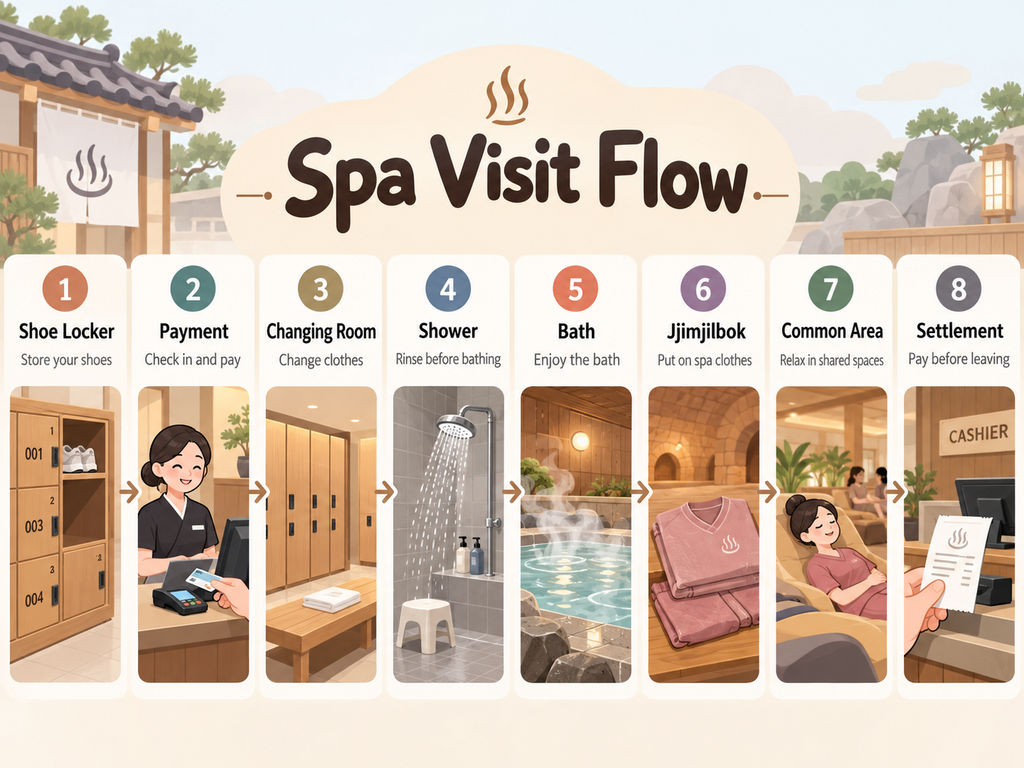
The exact order varies, but a first visit usually works something like this:
- Pay admission. Ask whether your ticket includes both the bath and jjimjil areas.
- Store your shoes. Many facilities give you a shoe-locker key or wristband.
- Enter the correct changing area. Follow the men’s or women’s signs.
- Use your locker. Store your clothes, phone, and valuables securely.
- Wash before entering the baths. Showering first is a firm part of communal-bath etiquette.
- Use the baths if you want to. You do not need to try every pool or sauna.
- Change into the provided jjimjil clothes. These are usually a loose T-shirt and shorts.
- Enter the shared area. Couples, friends, and families can meet here.
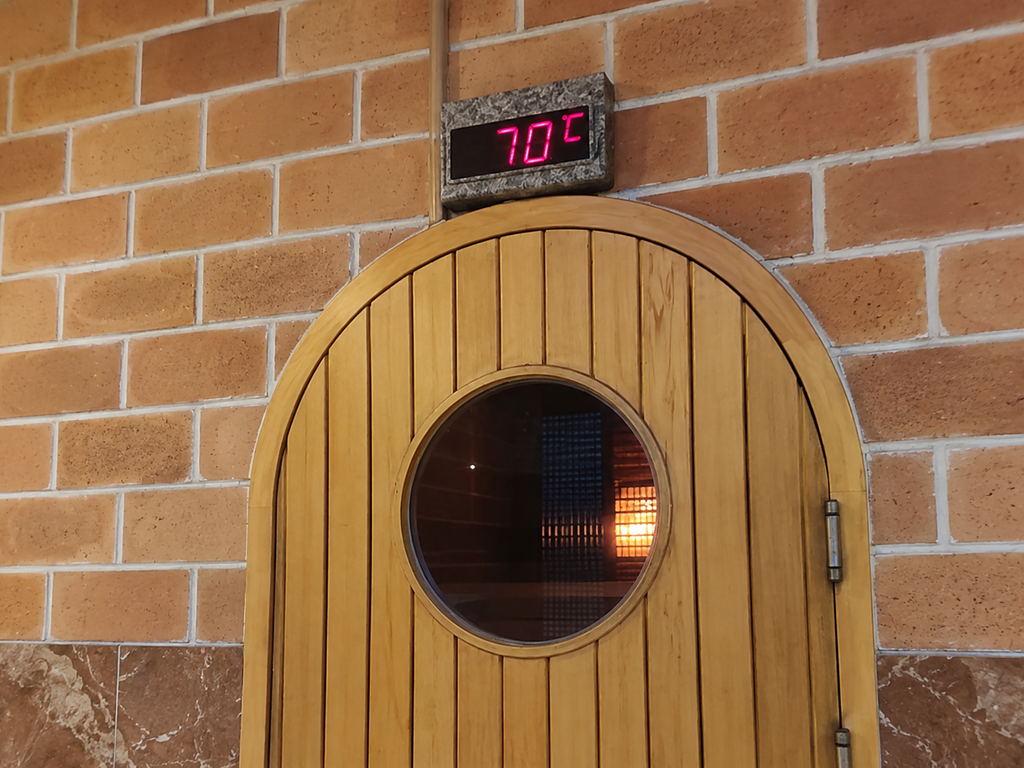
- Try the heated rooms. Check the posted temperature and leave if you feel uncomfortable.
- Rest or buy food. Purchases may be recorded on your wristband and paid when leaving.
- Return the key and clothing. Settle any extra charges before exit.
Some facilities reverse a few steps or separate ticket types. If the staff points you in a direction that differs from this list, follow the staff—not the internet.
Do You Have to Be Naked at a Jjimjilbang?
In the gender-separated communal bath area, being unclothed is normally part of the bathing culture. Swimwear and underwear are generally not worn in the pools unless a facility specifically says otherwise.
The shared jjimjil area is different. You put on the clothing provided by the facility before entering. This is usually where mixed-gender groups meet, eat, and use the heated rooms.
If communal bathing is a hard no for you, check whether the facility sells access to the shared area without requiring bath use. Do not assume this option exists everywhere.
What Do You Wear in the Shared Areas?
Most full jjimjilbangs issue a basic T-shirt and shorts set. Keep your regular clothes and larger belongings in the changing-room locker. Policies on socks, personal shirts, or extra clothing vary.
Bring clean underwear for afterward. A hair tie is useful if you have long hair, and your preferred skincare or hair products may be worth carrying because the supplied toiletries can be basic.
What Are the Heated Rooms?
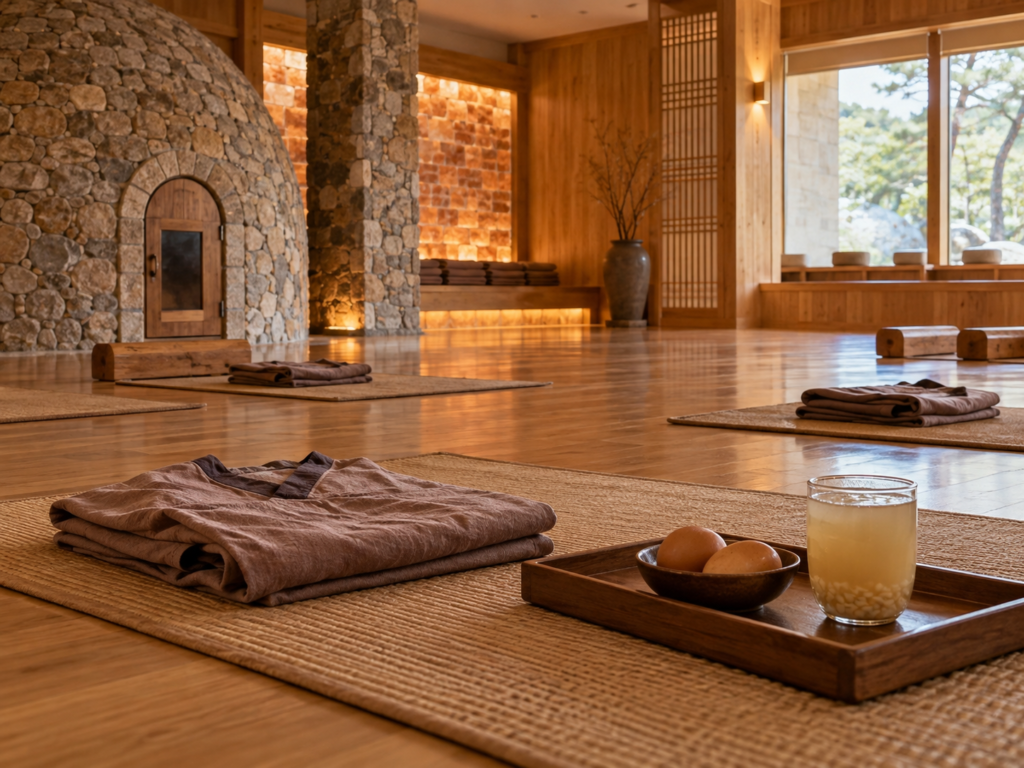
These are shared, clothed rooms kept at different temperatures. Depending on the facility, you may see rooms themed around charcoal, salt, clay, stone, or other materials, plus a cool room for a break.
The theme does not turn the room into medical treatment. Treat health claims cautiously, read temperature signs, and leave whenever the heat feels unpleasant. The hottest room is not a tourist challenge you need to win.
What Do People Actually Do There?
Mostly, people slow down. They sit or lie on heated floors, talk quietly, watch television, use a heated room for a short period, eat something, or rest after bathing.
It is social without being a party venue. A family might spend several hours at a large complex, while someone visiting a neighborhood bathhouse may wash, warm up, and leave much sooner. Not every Korean visits regularly, and not every jjimjilbang resembles a K-drama set.
What Food Can You Eat at a Jjimjilbang?
Roasted or baked eggs (gureun gyeran) and sweet rice drink (sikhye) are the two foods most strongly associated with the jjimjilbang image. They are easy to eat while resting and often appear in Korean television scenes set in jjimjilbangs.
Larger snack bars may also sell ramen, tteokbokki, seaweed soup, ice cream, or simple meals. Selection and opening hours vary, and food is normally an extra purchase rather than part of admission.
What Is a Korean Body Scrub?
Seshin (세신) is a vigorous exfoliating scrub usually performed by an attendant in the bathhouse area. It is not the same as casually using a body scrub product in a private shower.
Where available, seshin is generally a separately paid service and may have its own hours or queue. It is not automatically included with admission. Ask about price and availability before undressing if this service matters to you.
Is Massage Included?
Usually not. Admission generally covers the facilities listed by that business; massage, seshin, beauty treatments, private rooms, food, and premium amenities may cost extra.
Do not use “spa” in an English listing as proof that massage is included. In Korea, the word may describe a bath-and-sauna complex rather than a treatment package.
How Much Does a Jjimjilbang Cost?
In the current Seoul examples checked for this guide, ordinary adult jjimjil admission is around ₩15,000–₩20,000 before extras. Treat that as a planning range, not a Seoul-wide standard.
| Current Example | Type | Adult Admission Found | Hours Found | Overnight? | Checked |
|---|---|---|---|---|---|
| Supsok Hanbang Land, Seodaemun | Traditional charcoal-kiln jjimjilbang | ₩15,000 | 8:00 a.m.–9:00 p.m. | No, based on listed hours | Sep. 23, 2026 |
| Park Habio Water Kingdom & Jjimjil Spa, Songpa | Large urban leisure complex | Listed regular adult price: ₩18,000 weekdays / ₩20,000 weekends | Jjimjilbang 7:00 a.m.–10:00 p.m.; sauna until 11:00 p.m. | No | Sep. 23, 2026 |
| Sibeom Sauna, Yeouido | Neighborhood bathhouse with limited jjimjil operation | Not published on the official tourism listing | Bathhouse listed as 24 hours | Not confirmed | Sep. 23, 2026 |
Discounted app tickets may be cheaper than the posted regular price. Food, scrub services, massage, late-night charges, or premium rooms can change the total. Check the exact ticket and facility page on the day you plan to visit.
How Long Do People Stay?
There is no standard visit length. A bath-focused stop might take 1–2 hours. Add several heated rooms, a meal, and a long rest, and the visit can easily take half a day.
Time limits also matter. Some tickets start a fixed-use period when issued and charge an hourly overstay fee. Park Habio’s current ticket information, for example, warns that excess time is charged at exit. Read the ticket conditions instead of assuming you can stay until closing.
Can You Sleep at a Jjimjilbang?
Some jjimjilbangs allow overnight use, but many do not. A late closing time does not automatically mean that sleeping is permitted, and “24 hours” may describe the bathhouse even when the jjimjil area operates on a reduced schedule.
If you need overnight accommodation, confirm three things directly: whether overnight rest is currently allowed, whether a night surcharge applies, and whether access to the sleeping area is guaranteed. A jjimjilbang floor is not a substitute for a reserved hotel room when you need privacy or certainty.
Are Jjimjilbangs Open 24 Hours?
There is no universal rule. Supsok Hanbang Land and Park Habio both currently list evening closing times, while Visit Seoul lists Sibeom Sauna’s bathhouse as open 24 hours and notes that its jjimjilbang operates only in limited capacity.
That difference is exactly why older “all jjimjilbangs are 24/7” guides cause trouble. Confirm the bathhouse hours, jjimjil-room hours, last entry, and overnight policy separately.
For Korean map listings and current phone details, MBK’s guide to using Naver Map in Korea can help.
Can Foreign Tourists Visit?
In general, yes. You do not need to be Korean or arrive with a Korean companion. The practical difficulty is more likely to be language, payment, or understanding the locker system than entry itself.
English signs are not guaranteed. Save the Korean facility name and address, carry a payment method that works in Korea, and ask in advance if you need a specific service. Passport or ID requirements may differ, especially for overnight access or age verification.
What About Tattoos?
Tattoo policies vary by facility. Do not assume that Japan-style blanket restrictions automatically apply in Korea, but do not assume every Korean bathhouse will accept every tattoo either.
Ask the exact facility before visiting, particularly if your tattoo is large or difficult to cover. A short message with a photo-free description is usually more useful than relying on a years-old forum answer.
What Should You Bring?
Pack lightly:
- clean underwear and fresh socks;
- your preferred facial, hair, or body products;
- a hair tie if useful;
- a payment card plus a little cash as backup;
- any personal item you genuinely need after bathing.
Towels, soap, shampoo, and jjimjil clothes may be supplied, sold, or limited depending on the venue. Park Habio’s current ticket information, for example, specifies a towel allowance. Check before bringing half your bathroom in a tote bag.
Jjimjilbang Etiquette First-Time Visitors Should Know
- Wash before entering a communal bath. This is the rule that matters most.
- Follow the gender-separated signs. Ask staff if anything is unclear.
- Wear the provided clothes in the shared area. Do not walk into the common lounge in bath-area attire.
- Keep conversation and phone audio reasonable. People are resting.
- Respect towel and product rules. Facilities differ in what they provide and where items may be used.
- Keep phones and cameras out of changing and bathing areas. Privacy comes before travel content.
- Watch posted temperatures and safety notices. Leave heated rooms before you feel unwell.
- Settle wristband purchases before leaving. Food or extra services may be added to your locker number.
Can You Take Photos Inside?
Never photograph people in changing rooms or bathing areas. Keep your phone stored unless you genuinely need it, and follow any no-phone signs.
A lounge or food area may feel public, but that does not automatically make photography acceptable. Ask staff first and frame photos so no other guests are recognizable. If permission is unclear, skip the shot.
Jjimjilbang vs Sauna vs Spa vs Onsen
| Term | What It Usually Means | What Not to Assume |
|---|---|---|
| Jjimjilbang | Korean bath, heated-room, and rest-space complex | That it is luxurious, private, or open overnight |
| Korean sauna | Can mean a bathhouse, sauna, or full jjimjilbang depending on the business | That the English word describes every facility accurately |
| Western-style spa | Treatment-focused business offering massage, facials, or private wellness services | That communal baths or Korean heated rooms are included |
| Japanese onsen | Bathing culture centered on naturally heated spring water, with its own Japanese customs | That Korean jjimjilbang rules, clothing, and facilities are the same |
Are Jjimjilbangs Still Common in Korea Today?
They still exist, but the old image of countless giant, inexpensive, 24-hour complexes no longer describes every city or neighborhood. Current options include older local bathhouses, charcoal-kiln venues, family leisure complexes, and polished modern spa facilities.
Some famous businesses shown in older English-language guides have closed. Dragon Hill Spa in Yongsan is one well-known example, so a saved blog post from years ago is not enough evidence that a facility still operates.
The culture has not vanished. It has become less uniform. For travelers, that makes checking the exact business more important than memorizing a supposedly universal jjimjilbang formula.
Current Examples of Jjimjilbang Types in Seoul
These three places show how different a Seoul jjimjilbang can look, so use them as examples rather than a ranking.
Supsok Hanbang Land — Traditional Charcoal-Kiln Style
This Seodaemun facility centers its identity on charcoal kilns rather than a luxury treatment menu. VisitKorea currently lists adult admission at ₩15,000 and operating hours of 8:00 a.m.–9:00 p.m. Because other live listings show different hours, calling ahead is sensible.
Park Habio — Urban Leisure Complex
Park Habio combines a sauna, jjimjil spa, and water park in Songpa. The current Visit Seoul listing separates the hours: the jjimjilbang closes at 10:00 p.m., the sauna at 11:00 p.m., and the water park earlier. It is a useful example of why one building can have several schedules.
Sibeom Sauna — Neighborhood Bathhouse With Limited Jjimjil Space
Visit Seoul lists this Yeouido bathhouse as operating 24 hours, while explicitly saying its jjimjilbang runs in limited capacity. That makes it a better example of a local bathhouse with an attached feature than a giant all-night leisure complex.
How to Choose Your First Jjimjilbang
Start with the kind of experience you actually want.
If traditional heated-room culture is the main reason you are going, look for an older-style or charcoal-kiln jjimjilbang. Just check the current hours and how much English assistance is available before making a special trip.
For an easier first visit, a larger modern complex can be more straightforward because the zones, prices, and opening hours are usually explained more clearly.
Families should check age rules, guardian requirements, rest areas, and whether any children’s facilities shown online are actually operating.
If you only have a couple of hours, location matters more than finding the “perfect” jjimjilbang. Pick one that fits your existing route and confirm that your ticket includes the areas you actually want to use.
Planning to stay for several hours? Check the ticket time limit, closing time, food hours, and any overtime charges before you settle onto the heated floor.
And do not choose a facility based only on the prettiest social-media video. That waterfall, themed room, or suspiciously empty luxury lounge may belong to a different venue—or a different country.
Common Mistakes First-Time Visitors Make
- assuming “spa” means massage is included;
- expecting every facility to stay open all night;
- confusing bathhouse hours with jjimjil-area hours;
- not showering before entering a shared bath;
- wearing the wrong clothing in the bath or common area;
- photographing people or private spaces;
- assuming food, towels, scrub services, or toiletries are free;
- relying on an old article about a facility that has closed.
Useful Korean Words and Phrases
| Korean | Meaning |
|---|---|
| 찜질방 | jjimjilbang / heated-room complex |
| 목욕탕 | public bathhouse |
| 사우나 | sauna; may also refer to a bathhouse business |
| 온탕 | hot bath |
| 냉탕 | cold bath |
| 찜질복 | jjimjilbang clothes |
| 탈의실 | changing room |
| 신발장 | shoe locker |
| 락커 | locker |
| 수건 | towel |
| 세신 | Korean body scrub |
| 식혜 | sweet rice drink |
| 구운계란 | baked or roasted egg |
| 매점 | snack bar / shop |
| 입장료 | admission fee |
| 영업시간 | opening hours |
찜질방 이용하고 싶어요.
I’d like to use the jjimjilbang.
수건은 어디 있어요?
Where are the towels?
찜질복은 어디서 받아요?
Where do I get the jjimjilbang clothes?
몇 시까지 해요?
What time do you close?
밤에도 이용할 수 있어요?
Can I use or stay at the facility overnight?
Is a Jjimjilbang Worth Trying on a Korea Trip?
It is worth considering if you are curious about Korean bath culture, enjoy sauna-style heat, or want a slower cultural activity between busier sightseeing days. A full jjimjilbang also lets friends or couples meet again in the shared area after using separate baths.
Skip it if communal bathing makes you uncomfortable, you want a private treatment, or your itinerary is already packed. You do not need to force yourself through the bath area just to collect a “Korean experience.” A head spa or private wellness treatment may suit you better.
What Is a Korean Head Spa?
FAQ
What is a jjimjilbang?
A jjimjilbang is a Korean facility combining heated rooms and relaxation spaces, often with a gender-separated public bath. Food counters and extra services vary by location.
What is the difference between a jjimjilbang and a spa?
A jjimjilbang focuses on communal bathing, shared heated rooms, and casual rest. A Western-style spa is more likely to center on booked treatments such as massage or facials.
Is a jjimjilbang the same as a sauna?
Not exactly. Sauna rooms may be part of a jjimjilbang, but the full facility can also include baths, food, and shared rest areas.
Do you have to be naked at a jjimjilbang?
Usually only in the gender-separated bath area. You wear the facility-provided clothing in the shared jjimjil area.
Are men and women separated?
Bathing and changing areas are generally separated by gender. The clothed heated-room and lounge areas are commonly shared.
What do you wear at a jjimjilbang?
Facilities usually provide a T-shirt and shorts for the common area. Regular clothing, swimwear, and underwear are generally not worn in communal bath pools.
Can foreigners use jjimjilbangs?
Generally yes. English support and individual entry policies vary, so save the Korean name and check special requirements beforehand.
How much does a jjimjilbang cost?
The Seoul examples verified for this guide list ordinary adult admission around ₩15,000–₩20,000. Optional services, food, premium facilities, and overtime charges cost extra.
Can you sleep at a jjimjilbang?
Only where the facility currently permits overnight use. Confirm the sleeping policy and any late-night fee rather than relying on the opening hours alone.
Are jjimjilbangs open 24 hours?
Some bathhouses are, but many jjimjilbangs close at night. Bath, sauna, water-park, and jjimjil sections may all have different hours.
Do jjimjilbangs provide towels?
Many do, but the number and conditions differ. Some provide a limited allowance or charge for extras.
Can you eat inside a jjimjilbang?
Many larger facilities have a snack bar or restaurant in the common area. Food is normally purchased separately, and outside food may be restricted.
What is seshin?
Seshin is a vigorous Korean exfoliating body scrub offered at some bathhouses. It is usually a separate paid service.
Can you take photos inside a jjimjilbang?
Do not take photos in changing or bathing areas. Ask staff before photographing any common area, and never include identifiable guests without permission.
Are tattoos allowed?
Policies differ by facility. Contact the place you plan to visit rather than assuming tattoos are always allowed or always prohibited.
Sources & Last Updated
Key operating details and current examples were checked against:
- VISITKOREA — Supsok Hanbang Land
- Visit Seoul — Park Habio Water Kingdom & Jjimjil Spa
- Visit Seoul — Sibeom Sauna
- VISITKOREA — Current jjimjilbang culture and facility examples
- Park Habio current ticket conditions and listed prices
Last updated: October 08, 2026
Hours, prices, ticket inclusions, overnight access, and facility rules can change. Confirm the exact location before visiting, especially if you need late-night access, English assistance, tattoo approval, or a specific paid service.