
Seongsu vs Myeongdong is a common choice for first-time Seoul visitors, but the better option depends on whether you care more about convenience or discovery.
Seongsu is more interesting if your idea of sightseeing involves Korean brands, ambitious cafés, and whatever pop-up has a queue this week.
That sounds simple until you have four days in Seoul and need to choose both a hotel base and where to spend your limited shopping time.
For most first-time visitors, Myeongdong is the better place to stay. It has more hotels, denser shopping, easier access to classic sights, and a less complicated airport journey.
Seongsu is the better half-day destination for café lovers and travelers who want contemporary Korean fashion, beauty flagships, and pop-up culture.
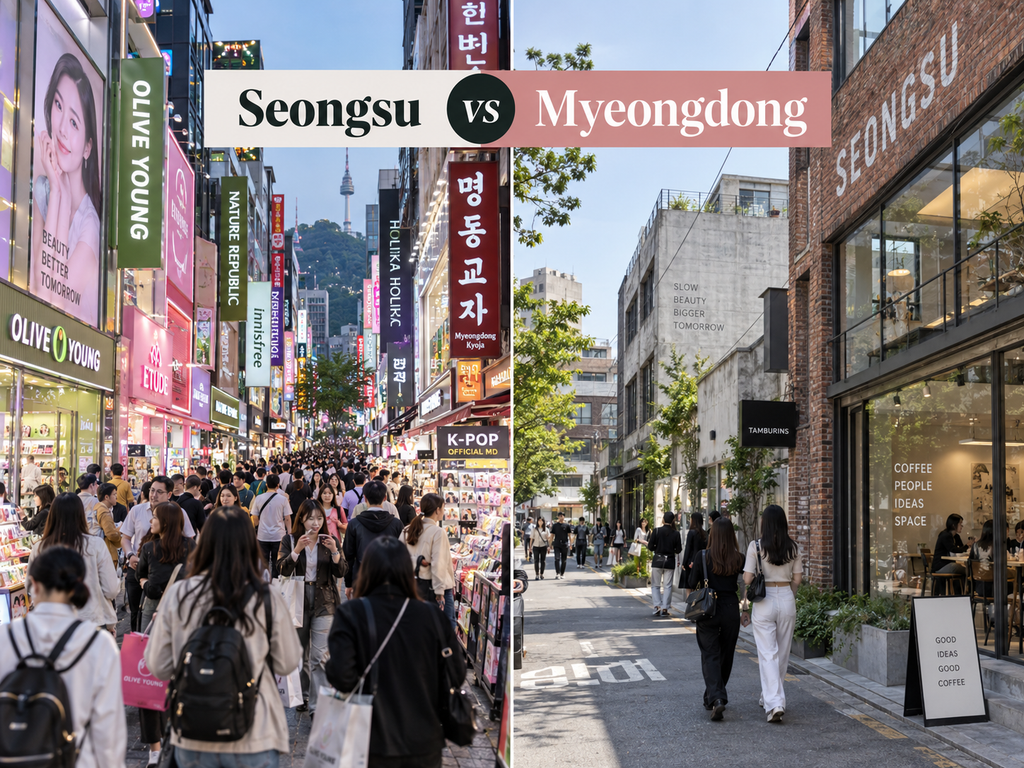
Quick Answer: Seongsu or Myeongdong?
| Category | Seongsu | Myeongdong | Better for |
|---|---|---|---|
| First-time visitor convenience | Interesting but spread out | Compact, central, and tourist-ready | Myeongdong |
| Shopping | Korean fashion, lifestyle brands, flagships, pop-ups | Dense beauty, fashion, department stores, souvenirs | Depends |
| K-beauty | Better for discovery and brand experiences | Better for buying many products efficiently | Depends |
| Cafés | Destination cafés and bakeries | Plenty of practical coffee stops | Seongsu |
| Korean food | Old local institutions plus newer dining | Famous noodles, soups, quick solo meals | Tie |
| Trendy atmosphere | One of Seoul’s main trend-focused districts | Commercial and tourist-oriented | Seongsu |
| Traditional sightseeing access | Requires more cross-city travel | Better positioned for palaces, Insadong, and Namsan | Myeongdong |
| Hotels | Smaller, less varied selection | Far more choice across price levels | Myeongdong |
| Public transportation | Line 2 is useful, but the district involves walking | Line 4 plus nearby Line 2 access | Myeongdong |
| Airport access | Direct buses exist, but rail transfers are less convenient | Airport buses and quick access to Seoul Station | Myeongdong |
| Solo travel | Great for browsing and cafés | Easier solo dining and late-return logistics | Myeongdong |
| Rainy-day convenience | Outdoor walking between scattered stops | Dense stores, malls, and underground connections nearby | Myeongdong |
| Evening activities | Good for dinner; many cafés and pop-ups close earlier | Shopping and dining stay active later | Myeongdong |
| Budget | Spending adds up at cafés and design stores | Wider hotel and quick-meal range | Depends |
| Best overall for a first trip | Best as a focused visit | Best as a practical base | Myeongdong |
Choose Myeongdong if convenience, classic sightseeing, and efficient K-beauty shopping matter most.
Choose Seongsu if cafés, Korean design, flagships, and seeing what feels current in Seoul are the point of the day.
And if you are choosing a hotel rather than an afternoon plan, Myeongdong is the clearer choice for most first-time visitors.
Seongsu vs Myeongdong: The Biggest Difference
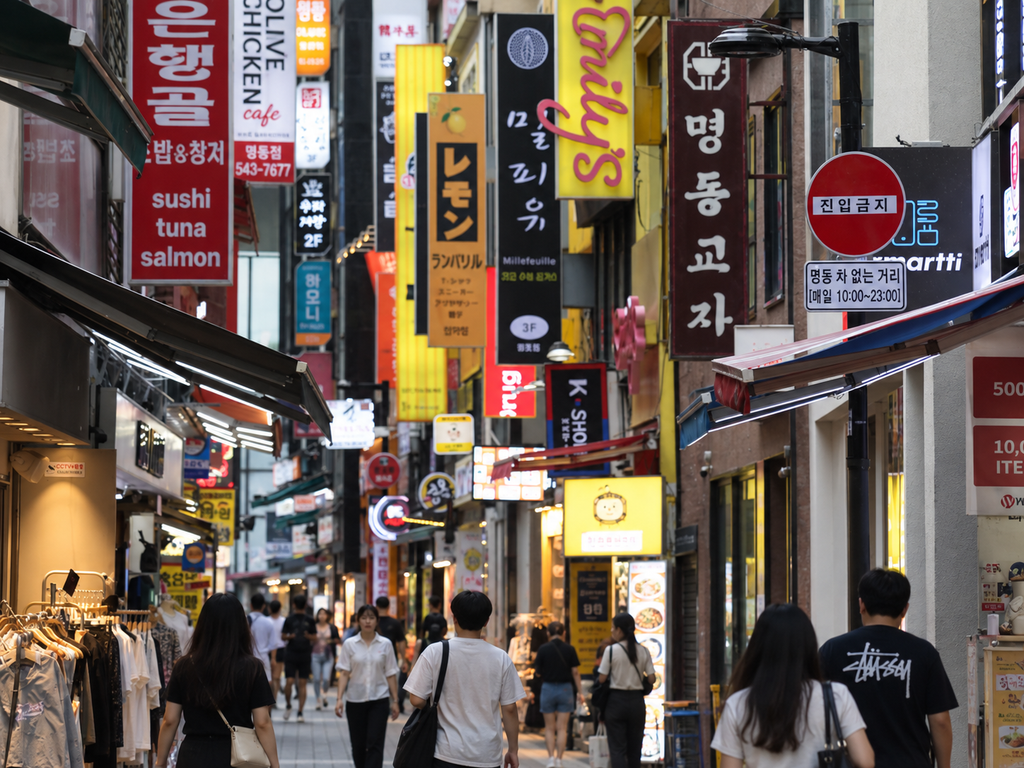
Myeongdong compresses a lot into a small area: hotels, beauty stores, street food, restaurants, department stores, currency exchange, and staff accustomed to international visitors.
It can be crowded and aggressively commercial, but it wastes very little of a first-timer’s time.
Seongsu is different.
Its attractions are spread across former industrial streets between Seongsu Station, Ttukseom Station, and Seoul Forest.
The draw is not one landmark. It is the mix of converted warehouses, cafés, Korean fashion and beauty flagships, concept stores, and temporary pop-ups.
Seoul’s recent tourism reporting increasingly treats Seongsu’s pop-up culture as a visitor attraction, while international spending has expanded beyond traditional tourist districts such as Myeongdong into areas including Seongsu.
So the old shortcut — “Myeongdong for tourists, Seongsu for locals” — does not really work anymore.
Both attract international visitors.
The difference is more practical:
Myeongdong is built for efficiency. Seongsu is built around discovery.
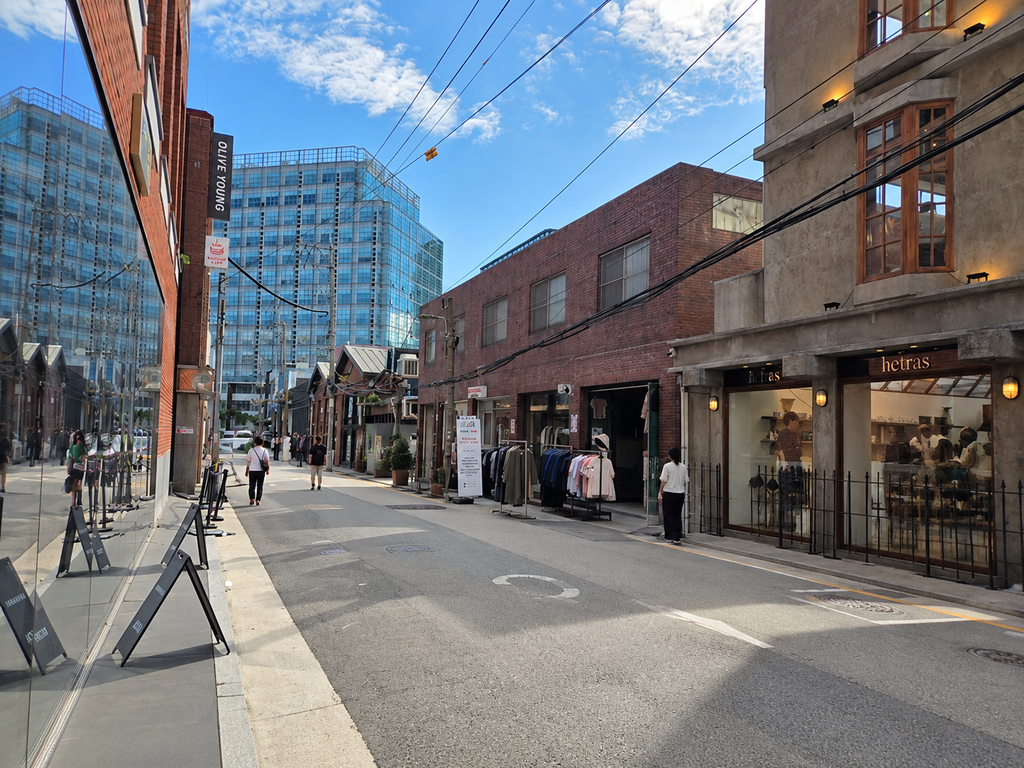
Which Is Better for Shopping?
If affordable accessories are on your list, compare the Myeongdong and Seongsu NYUNYU branches before choosing your route.
Myeongdong Shopping
Myeongdong is the stronger all-in-one shopping district.
Beauty stores sit close together, while Lotte Department Store, Shinsegae’s main store, fashion chains, character shops, and duty-free retail are within or beside the wider neighborhood.
If you have a shopping list and only two hours, that density matters.
The area is especially easy for comparison shopping. You can check several stores without crossing half the city, find staff accustomed to international customers, and use tax-refund services at participating retailers.
The downside is the crowd, and after a while many stores can start to feel similar. It is also very easy to spend more than you planned.
Seongsu Shopping
Seongsu is better when the store itself is part of the attraction.
Current anchors include Olive Young N Seongsu and experiential spaces from Korean fashion, fragrance, eyewear, and beauty brands.
ADERERROR’s Seongsu space and Tamburins are examples of the district’s theatrical flagship style, although the exact mix of stores should always be checked before visiting.
Pop-ups are the wildcard.
A space you saw on TikTok may close before your flight lands, and a weekend queue can consume more time than the event deserves.
Check the brand’s official Instagram and Naver Map on the morning of your visit.
Never build a Seongsu route from a six-month-old “current pop-ups” video.
Shopping takeaway: Myeongdong is better for completing a list. Seongsu is better for discovering brands and enjoying retail as part of the experience.
Which Is Better for K-Beauty Shopping?
The 2026 opening of Olive Young Central Myeongdong Town strengthened Myeongdong’s practical advantage.
The large Myeongdong store focuses heavily on broad selection and shopping efficiency, while Olive Young’s major Seongsu presence puts more emphasis on experience and brand discovery.
That is almost the whole comparison.
Choose Myeongdong for:
- Buying many products efficiently
- Comparing a broad range
- First-time K-beauty shopping
- Gifts and repeat purchases
Choose Seongsu for:
- Experiential beauty flagships
- Discovering emerging brands
- Beauty-related pop-ups
- Stores you actually want to photograph
Do not assume every Seongsu flagship has the lowest price or the widest stock.
Some spaces are designed to introduce the brand rather than function like a giant beauty supermarket.
If you want sunscreen, sheet masks, and several gifts in one basket, Myeongdong is easier.
If you want to see how Korean beauty brands present themselves at home, Seongsu is more revealing.
Which Has Better Cafés?
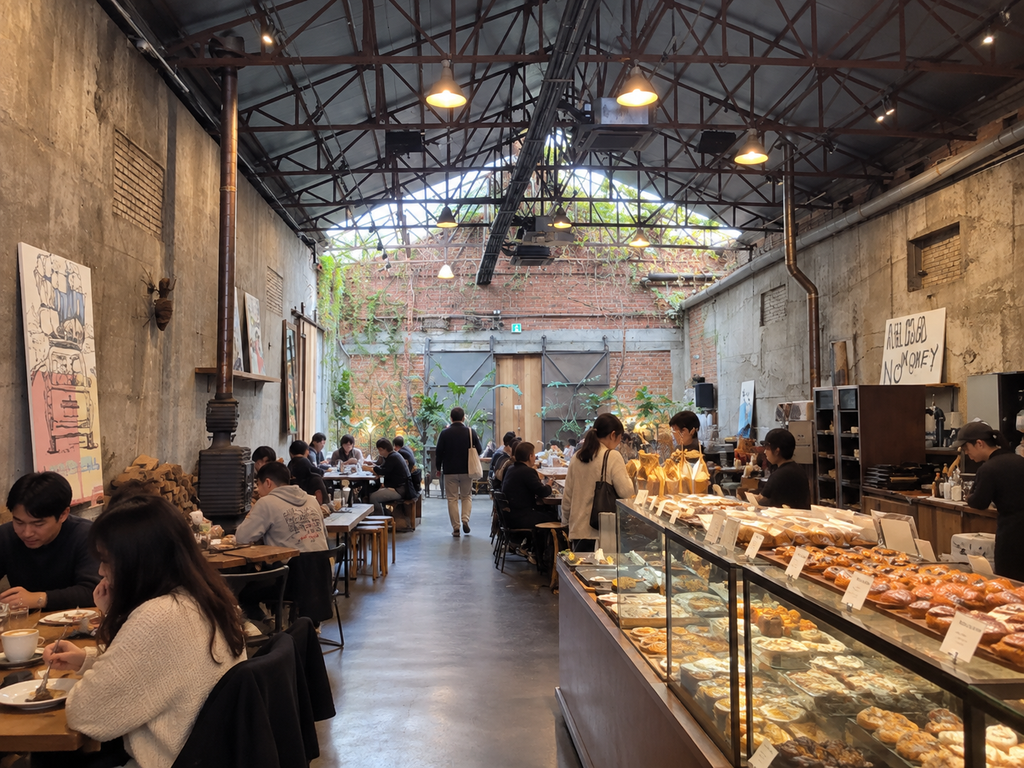
Seongsu wins, and this one is not especially close.
Café Onion Seongsu and Daelim Changgo helped establish the warehouse-café image of the neighborhood, while smaller roasters and bakeries fill the streets toward Seoul Forest.
These are places people cross town to visit, not merely somewhere to sit until the rain stops.
The catch is distance and waiting.
A café that looks close on a map may mean another 10 or 15 minutes on foot.
The most photographed bakery item may also come with a Saturday queue and nowhere obvious to sit.
Pick one priority café and one nearby backup.
Myeongdong has no shortage of coffee. Chains, hotel cafés, department-store cafés, dessert shops, and quieter places around Myeongdong Cathedral make it easy to take a break.
Its café scene is useful rather than the main reason to visit.
For a café afternoon: Seongsu.
For coffee that fits around the rest of your itinerary: Myeongdong.
Which Is Better for Korean Food?
Myeongdong is stronger for famous, easy-to-understand Korean meals.
Myeongdong Kyoja serves a compact menu centered on kalguksu noodles and mandu, while Hadongkwan is well known for gomtang.
The area also makes solo meals, toast, noodles, soups, and quick dinners relatively easy.
Seongsu has more range than its café reputation suggests.
Somunnan Seongsu Gamjatang is a long-running pork-bone-stew restaurant near the main shopping streets, while the Seoul Forest side of the neighborhood mixes Korean restaurants with newer dining concepts.
The useful distinction is not “authentic versus touristy.”
Myeongdong makes recognizable Korean classics easier to fit between sightseeing stops.
Seongsu works well when you choose a restaurant as part of a planned afternoon.
For completely unplanned solo dining, Myeongdong has the edge.
Which Is Better for Hotels?
Myeongdong wins for most first visits.
Its accommodation ranges from hostels and compact business hotels to familiar international brands and higher-end properties.
More importantly, there are many options close to Myeongdong Station, Euljiro 1-ga, or airport-bus stops.
That helps with luggage, early departures, and evenings when you would rather not study another subway transfer diagram.
Seongsu has fewer conventional tourist hotels.
Some hotels marketed as “Seongsu” may actually sit closer to Konkuk University, Seoul Forest, or another station.
So do not book based on the neighborhood name alone.
Check the actual hotel entrance-to-station route.
Stay in Seongsu if the neighborhood itself is a major purpose of your trip and the hotel is genuinely close to the station you plan to use.
Otherwise, visit Seongsu for half a day and sleep somewhere more connected.
Compare places to stay before you decide. If Myeongdong is your base, check hotels within a comfortable walk of Myeongdong Station or Euljiro 1-ga. If you prefer Seongsu, check the actual walk from the hotel entrance to Seongsu, Ttukseom or Seoul Forest Station. Compare the total price for your dates, cancellation terms and recent guest reviews—not just the neighborhood name.
Which Is Easier for Getting Around Seoul?
Seongsu Station sits on Line 2, which is useful for Jamsil, Gangnam, Euljiro, and Hongik University.
Ttukseom Station also serves the western side of the district, while Seoul Forest Station on the Suin–Bundang Line can be useful depending on your route.
The problem is not the trains.
The problem is that “Seongsu” covers a larger walking area than many first-time visitors expect.
Myeongdong Station is on Line 4, only two stops from Seoul Station.
Euljiro 1-ga on Line 2 is also within walking distance of the northern side of the neighborhood, giving many hotels access to more than one useful line.
Palaces, Insadong, Namsan, Namdaemun, Dongdaemun, and central Seoul usually require less backtracking from here.
The journey between Seongsu and Myeongdong generally takes around half an hour by subway once transfer and walking time are included.
They are easy to combine on one Seoul trip.
They are not neighboring districts.
Which Is Better for Incheon Airport Access?
Myeongdong is usually easier with luggage.
It has airport-limousine stops, and Myeongdong Station is only two Line 4 stops from Seoul Station, where AREX trains depart.
Check current airport-bus information through Incheon Airport or the Airport Limousine service before traveling.
Your actual best route depends on the hotel entrance, bus stop, terminal, and departure time — not just the neighborhood name.
Seongsu also has airport-bus options in the wider area, but the nearest stop may not be convenient for every hotel.
Using AREX generally involves another transfer.
For an early flight or two large suitcases, compare the door-to-door number of steps, not just the scheduled travel time.
MBK’s guide to Seoul Station to Incheon Airport explains the main AREX options.
Which Is Better for Classic Seoul Sightseeing?
Myeongdong is the better launch point.
Gyeongbokgung, Bukchon, Insadong, Namsan, Namdaemun, and Dongdaemun are all in or around central Seoul.
You will still use subways and buses, but less of your trip is spent zigzagging across the city.
Seongsu is better aligned with Seoul Forest, eastern Seoul, Jamsil, and Line 2 destinations such as Gangnam.
That is useful on a shopping-focused trip.
It is less efficient if your first two mornings begin at palaces and traditional neighborhoods.
Which Area Is Better at Night?
Myeongdong has the more dependable evening atmosphere.
Beauty shops, restaurants, street stalls, and tourist-facing businesses often remain active after dinner.
You can also walk toward Euljiro or Cheonggyecheon when you want something beyond shopping.
Seongsu is lively around dinner and has plenty of restaurants and bars, but many pop-ups and destination cafés close earlier than Myeongdong’s main retail streets.
It is not Seoul’s strongest late-night district.
Check closing times before saving all your Seongsu plans for 8 p.m.
If a flagship closes at 8 p.m., there is not much point arriving at 8:10.
Seongsu vs Myeongdong for Solo Travelers
Both work well for solo browsing.
Seongsu is comfortable for spending time alone in cafés and shops, although some popular restaurants can be awkward during peak hours if seating is limited.
Myeongdong offers more quick meals, familiar chains, hotels, and commercial activity later in the evening.
Neither area is risk-free, so normal city precautions still apply.
Keep an eye on your belongings in crowds, check your last train, and use a navigation app that works well in Korea.
For a first solo trip, Myeongdong’s easier logistics usually outweigh Seongsu’s more relaxed daytime wandering.
Which Is Better on a Rainy Day?
Myeongdong wins.
Its stores are tightly packed, and department stores, underground shopping areas, malls, cafés, and restaurants provide more ways to stay indoors.
You will still cross streets, but a bad-weather shopping day remains workable.
Seongsu’s best stops are more scattered.
On a rainy day, moving between Seongsu pop-ups gets tiring surprisingly fast because many stops still require outdoor walking.
If the forecast looks bad, choose one indoor cluster, use taxis selectively, or move Seongsu to a dry day.
Which Area Is Cheaper?
Neither district is consistently cheaper.
Myeongdong has a wider range of budget hotels and quick meals, but tourist-focused shops and prime-location rooms can cost more.
Seongsu does not charge admission to walk around, but several specialty coffees, pastries, limited items, and design stores can quietly build an impressive receipt.
Transportation cost is usually not the deciding factor.
Time is.
A cheaper Seongsu hotel far from the places you actually want to visit may cost more in daily transfers and energy.
Compare the total trip, not one hotel-night price.
How Much Time Do You Need in Each Area?
Give Myeongdong two to four hours for focused shopping and a meal.
A half day works if you add a department store, Myeongdong Cathedral, Namdaemun, or Namsan.
Staying overnight makes sense because of the location — not because Myeongdong itself requires several full sightseeing days.
Give Seongsu half a day, ideally one afternoon.
Two hours is enough for one flagship and one café.
It is not enough for a relaxed route through pop-ups, shopping, food, and Seoul Forest.
A full day makes sense for serious shoppers or café-focused travelers, but most first-time visitors do not need to sacrifice an entire classic-sightseeing day.
If You Only Have Time for One, Which Should You Choose?
First trip to Korea: Myeongdong
Efficient shopping: Myeongdong
Buying lots of K-beauty: Myeongdong
Discovering newer beauty brands: Seongsu
Café-focused afternoon: Seongsu
Korean fashion and lifestyle brands: Seongsu
Classic sightseeing: Myeongdong
First solo trip: Myeongdong
One free afternoon after major sights: Seongsu
Rainy day: Myeongdong
Traveling with parents or heavy luggage: Myeongdong
Should You Stay in Seongsu or Myeongdong?
This is where “best to visit” and “best to stay” separate.
Seongsu may be the more memorable neighborhood if you are especially interested in contemporary Korean retail and café culture.
Myeongdong is still the more practical hotel base for most first-time visitors because it reduces friction across the whole trip:
More accommodation choice.
Easier classic sightseeing.
Later shopping.
Simpler airport options.
More backup meals when your original plan fails.
Choose a Seongsu hotel when spending repeated time in the neighborhood is intentional — not simply because social media made Seongsu sound like the center of everything.
Seoul is spread out more than it looks on a map, and you will notice that pretty quickly once you start walking between neighborhoods.
The Better Plan: You Probably Don’t Need to Choose
For a three- to five-day first trip, the most practical combination is usually:
Stay in Myeongdong → spend one half day in Seongsu.
Start Seongsu around lunch.
Visit one confirmed pop-up or flagship.
Choose one café.
Walk toward Seoul Forest if the weather cooperates.
Have dinner before heading back.
That gives you a look at contemporary Seoul without turning every palace morning or airport transfer into a cross-city commute.
Reverse the strategy only if shopping, cafés, beauty, or Korean fashion is the main purpose of your trip.
In that case, staying around Seongsu can make sense — but check the exact hotel location and late-evening transportation first.
MBK Verdict: Seongsu or Myeongdong?
Choose Myeongdong if:
- This is your first Seoul visit
- You want the easiest base for major sights
- You need many K-beauty products in limited time
- You value hotel choice, evening convenience, and simpler airport access
- You are traveling with luggage, parents, or a tight itinerary
Choose Seongsu if:
- Korean fashion, beauty flagships, and pop-ups are priorities
- You plan trips around cafés rather than treating them as rest stops
- You have already covered Seoul’s classic sights
- You prefer discovery over shopping efficiency
MBK’s pick for most first-time visitors: Myeongdong
Pick for a second Seoul trip: Seongsu
Pick for completing a shopping list: Myeongdong
Pick for a genuinely interesting shopping afternoon: Seongsu
Pick for staying overnight: Myeongdong
FAQ
Is Seongsu worth visiting for first-time tourists?
Yes, especially if you are interested in cafés, Korean brands, beauty flagships, or pop-ups.
Give it half a day rather than replacing your entire central-Seoul itinerary with it.
Is Myeongdong still worth visiting in 2026?
Yes, especially if you value convenience and shopping density.
The 2026 opening of Olive Young Central Myeongdong Town strengthened the area further for K-beauty shopping, although crowds and the tourist-oriented atmosphere remain the tradeoff.
Should I stay in Myeongdong or Seongsu?
Most first-time visitors will find it easier to stay in Myeongdong and visit Seongsu.
Stay in Seongsu when its cafés, brands, and eastern-Seoul location are central to several days of your trip.
Is Seongsu better than Myeongdong for shopping?
It depends on what you mean by shopping.
Seongsu is better for Korean design brands, experiential flagships, and temporary pop-ups.
Myeongdong is better for finishing a long beauty or general shopping list quickly.
Is Seongsu good for K-beauty shopping?
Yes.
Olive Young N Seongsu and individual brand spaces make it especially useful for discovery and in-store experiences.
Myeongdong remains easier for broad comparison and efficient purchasing.
How far is Seongsu from Myeongdong?
Allow roughly 25 to 35 minutes by subway, depending on your exact starting point, transfer, and walking time.
They are easy to combine during one Seoul trip but not close enough to treat as the same neighborhood.
How much time should I spend in Seongsu?
Plan a half day.
Two hours works for one or two fixed stops.
A full afternoon gives you enough time for a café, shopping, a pop-up, and possibly Seoul Forest.
Is Seongsu good at night?
It is good for dinner and early evening, but it is not Seoul’s strongest late-night neighborhood.
Many cafés, pop-ups, and flagship stores close earlier than Myeongdong’s main shopping streets.
Sources & Last Updated
This comparison was checked against information from the Seoul Metropolitan Government, current Seoul tourism resources, Incheon Airport, Airport Limousine, Olive Young, and current official or tourism listings for the places mentioned.
Useful official sources include:
- Seoul Metropolitan Government
- Incheon International Airport
- Airport Limousine
- Olive Young Central Myeongdong Town
- Myeongdong Kyoja
- Café Onion
Last updated: September 18, 2026.
Pop-ups, store tenants, opening hours, hotel prices, and airport-bus schedules can change quickly.
Check the official brand or venue account and a Korean navigation app shortly before visiting.