
You tap your card when you board a Seoul bus, find your stop, and then notice everyone tapping again before they get off.
Did you miss something?
Probably.
Is the driver about to personally escort you out of Korea?
Probably not.
Korean public transportation etiquette gets much easier once you separate actual system requirements from everyday habits.
Three things matter more than almost anything else:
tap correctly, let people move before taking their space, and keep yourself—and your suitcase—out of the way.
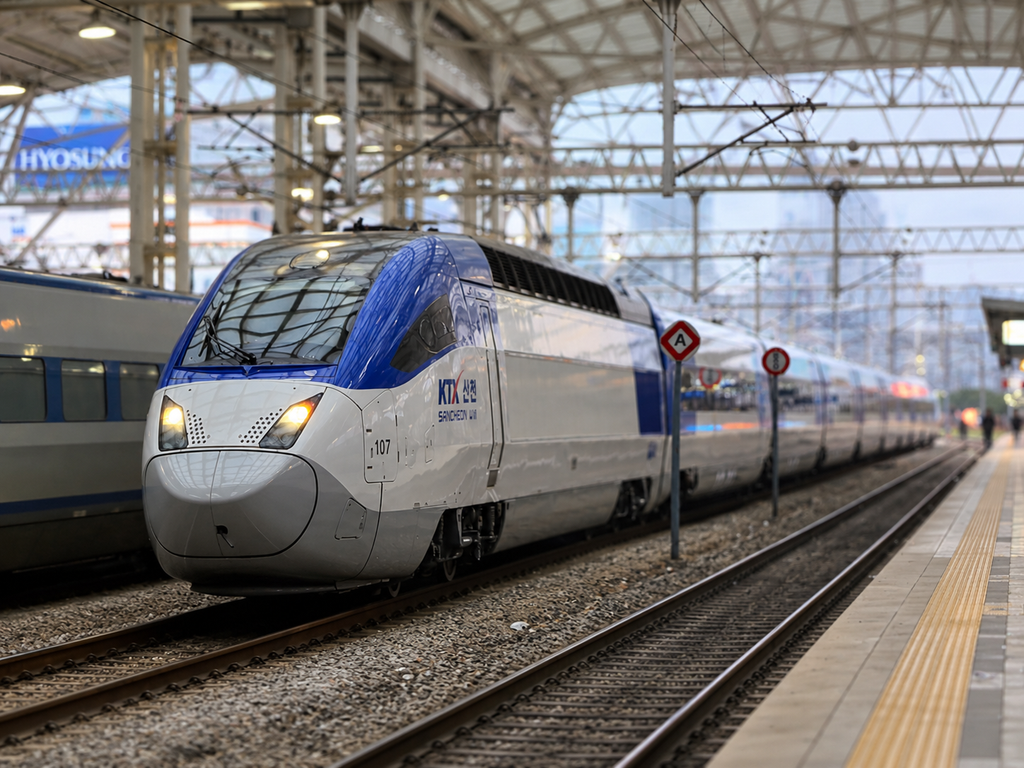
This guide focuses mainly on Seoul subways and city buses, plus Korail’s KTX.
Other Korean cities and bus operators can use slightly different fare or boarding systems, so when in doubt, follow the signs, card readers, and instructions in front of you.
The Rules That Matter Most
You do not need to memorize a giant list of Korean transit customs before your first ride.
Start with these.
- Tap in and out correctly. Use the fare gate when entering and leaving the subway. On Seoul buses, tap when boarding and again before getting off.
- Let passengers get off before you board.
- Keep priority and pregnancy seats available for people who need them.
- Press the bus stop button before your stop.
- Keep bags, calls, and your body out of other passengers’ way.
| Situation | What to Do | What Kind of Thing Is It? |
|---|---|---|
| Entering or leaving the subway | Tap at the fare gate | System requirement |
| Getting off a Seoul bus | Tap the exit reader | System requirement |
| Boarding a train | Let passengers leave first | Strong etiquette |
| Priority seating | Keep it available for people who need it | Designated use / etiquette |
| Getting off a bus | Press the stop button beforehand | How the bus system works |
| Carrying luggage | Keep doors and aisles clear | Safety and etiquette |
| Riding KTX | Use the car and seat on your ticket | Ticket requirement |
| Making calls | Keep them short and quiet | Strong etiquette |
Korean Subway Etiquette: What Tourists Often Get Wrong
1. Boarding Before People Get Off
Let people leave the train before you step inside.
Platform markings often show where passengers should wait, with the center area left open for people getting off.
At a busy transfer station, the real-life queue may look somewhat less elegant than the diagrams.
The basic rule still works.
Stand to the side, leave the middle open, and move in once exiting passengers have cleared the doorway.
You do not need to perform a perfect queueing ceremony.
Just avoid becoming the human cork in a subway bottle.
2. Treating Priority Seats Like Regular Empty Seats
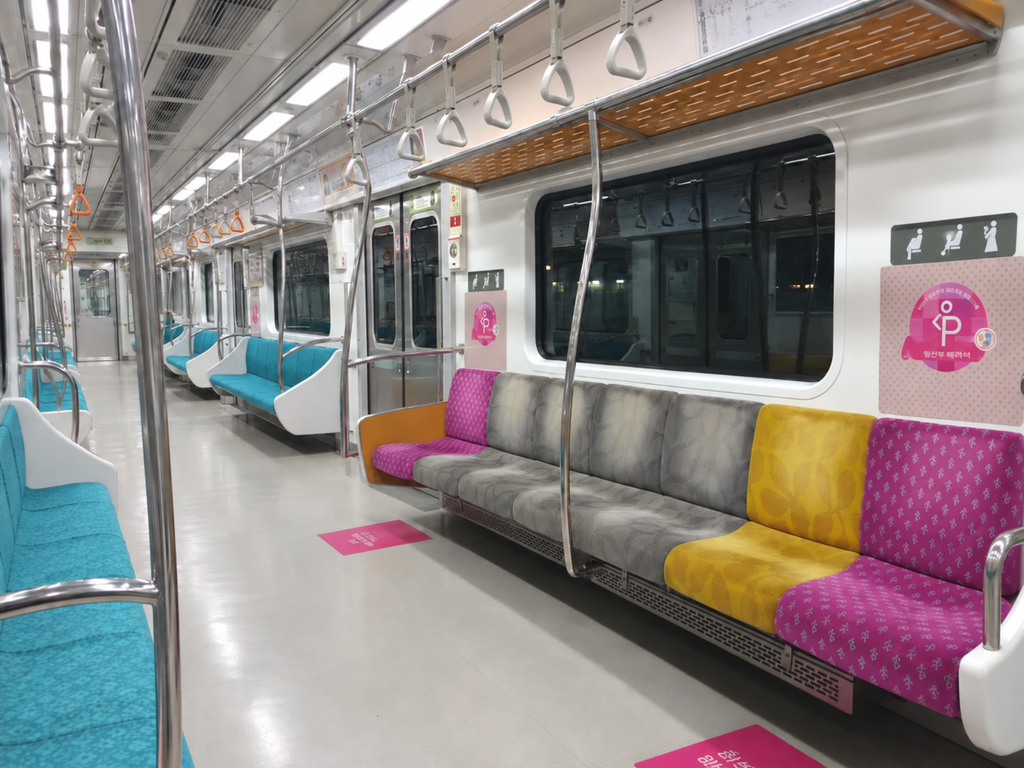
Seoul subway cars have designated priority seating for passengers such as older adults, people with disabilities or injuries, pregnant passengers, and adults traveling with infants.
You will also see separate pink pregnancy seats.
Those are intended for pregnant passengers, including people in early pregnancy whose condition may not be visible.
For tourists, the simplest approach is to use a regular seat when one is available and leave designated seating open for the people it was designed for.
And do not play detective with other passengers.
Not every disability is visible.
Not every pregnancy is visible either.
3. Leaving Your Suitcase in the Doorway
Nobody is surprised to see luggage on a subway heading toward Seoul Station or the airport.
The issue is not that you have a suitcase.
It is where you put it.
Move away from the doors when space allows.
Hold the handle so the case does not roll.
Avoid blocking aisles or designated wheelchair and stroller areas unless you actually need that space.
At a crowded station, you may occasionally need to step off for a moment to let other passengers leave, then get back on.
If you are traveling with two huge suitcases, avoiding commuter rush hour will make everybody’s life easier—including yours.
For airport luggage options, see MBK’s Seoul Station to Incheon Airport guide.
4. Watching Videos Out Loud or Taking a Long Phone Call
Phones are everywhere on Korean subways.
The phone is not the problem.
The volume is.
Use headphones for music and videos, turn off game sounds, and keep calls reasonably short and quiet.
Conversation itself is not forbidden.
But a full-volume speakerphone conversation in a crowded subway car will get you the kind of attention nobody ordered.
5. Forgetting to Tap Out at the Subway Gate
With a regular transportation card, tap when entering and when leaving the subway.
The system uses those records to calculate the trip and handle transfers correctly.
This became more important in the Seoul metropolitan railway network in 2026.
From March 7, eligible transit-card users who fail to record an exit can face an additional base fare when they next enter the railway system.
One-time tickets and some special passes can work differently.
For a standard transportation card, the easy habit is:
see reader → tap card → make sure it was accepted.
The Seoul Metropolitan Government transportation guide explains the normal entry and exit process.
A Few Subway Behaviors That May Feel Different
People may walk quickly through transfer stations.
A crowded carriage can mean standing closer to strangers than you are used to.
Passengers may start moving toward the door before the train has completely stopped.
And yes, almost everyone seems to be looking at a phone.
None of that is aimed at you.
The atmosphere changes dramatically by line, neighborhood, and time of day.
Watch how people move and follow the flow rather than interpreting hurry as hostility.
Korean Bus Etiquette and Rules Tourists Should Know
6. Assuming Every Korean Bus Uses the Same Door System
On most Seoul city buses, passengers normally board through the front door and get off through the rear door.
That separates the two passenger flows and allows the driver to see people boarding.
But do not turn that into a universal law for every bus in Korea.
Different vehicle designs, routes, regional systems, and crowd situations can vary.
Look for the card readers and door markings.
If the driver opens a particular door for you, that is also a fairly strong clue.
7. Forgetting to Tap When Getting Off the Bus
On a Seoul bus, tap your transportation card when you board and again before you get off.
The second tap records the end of your ride and is important for transfer discounts and fare calculation.
Seoul’s official transportation guidance specifically tells passengers to tap when exiting to receive transfer benefits.
If you forget, do not stick your arm through closing doors in a last-second attempt to save a transfer discount.
Get off safely.
Next time, tap before you reach the door and check the confirmation sound or screen.
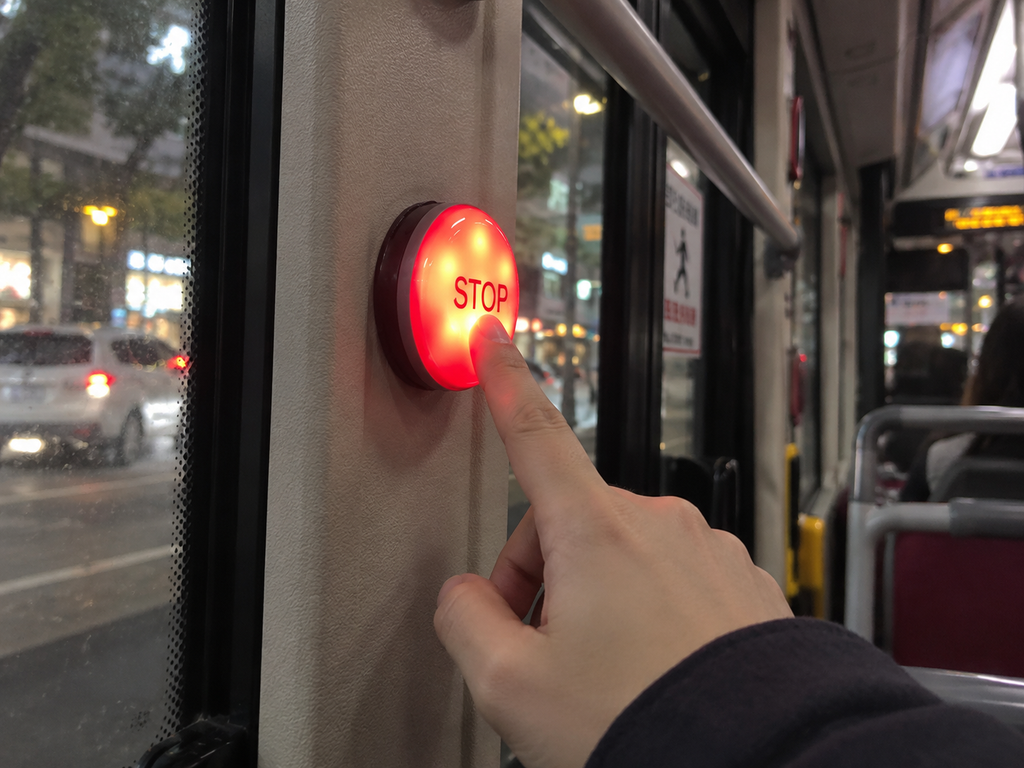
8. Waiting Too Long to Press the Stop Button
Do not assume a Korean city bus will automatically stop everywhere on its route.
Once your stop has been announced—or your navigation app shows it is next—press one of the red stop buttons inside the bus.
A light or display usually confirms the request.
If nobody asks to get off and nobody is waiting to board, the driver may continue.
This is one reason a bus can feel slightly less forgiving than the subway on your first day.
9. Standing Without Holding On
Korean city buses can accelerate, brake, and turn while you are still deciding where to stand.
Grab a rail as soon as you board.
If there is a seat, sit when practical.
When your stop is coming, press the button early, gather your belongings, and move toward the door carefully.
Being ready is helpful.
Falling across three strangers because you wanted to look very prepared is less helpful.
10. Wearing a Huge Backpack in a Crowded Aisle
A large backpack can take up much more space when it is still on your shoulders.
On a packed bus or subway, take it off and hold it low where you can control it.
Keep shopping bags away from the aisle and doors.
If your luggage is so large that other passengers cannot move around it, the bus may simply be the wrong transport option for that particular trip.
Subway, AREX, airport bus, or taxi can be easier depending on the route.
The useful test is simple:
Can other people still board, move, and get off safely?
Do I Really Need to Tap My Card Again?
For most tourists using a standard transportation card:
Subway: tap when entering and tap again when leaving.
Seoul bus: tap when boarding and tap again before getting off.
That second bus tap is especially important if you plan to transfer.
If several people are traveling together, having one transportation card per person is usually the least confusing setup.
That is especially true on the subway, where every rider needs to pass through the gate individually.
KTX Etiquette: What to Know Before a Long-Distance Train Ride
11. Sitting in Any Empty Seat
A regular KTX ticket gives you a specific:
- Train
- Departure
- Car
- Seat
Use the seat printed on your ticket.
KTX is not a subway where an empty seat is automatically yours.
If someone appears to be sitting in your place, check your ticket before assuming they are wrong.
Date, train number, car, and seat all matter.
Boarding at roughly the correct time but getting onto the wrong train is surprisingly possible when you are rushing.
Korail also sells limited standing tickets and operates designated unreserved seating on certain services.
Those are specific ticket types or cars.
They are not permission to take any reserved seat that happens to be empty.
See the current Korail ticket FAQ if your ticket is not a normal reserved-seat ticket.
12. Leaving Large Luggage in the Aisle
Korail’s passenger conditions allow passengers to carry personal baggage subject to size and carriage conditions, but luggage should not occupy passenger seats or block aisles.
Put smaller bags on the overhead rack when you can lift them safely.
Some KTX trainsets also have larger luggage areas near the ends of certain cars.
Do not assume every car has the same layout or unlimited luggage space.
There is no airline-style checked-baggage system where you hand over your suitcase and forget about it until Busan.
Keep valuables with you.
And if you are traveling directly from the airport with luggage, MBK’s Incheon Airport to Busan guide compares the realistic transport options.
What About Calls and Noise on KTX?
KTX is not a library.
You can talk.
But long or loud calls are better handled in the vestibule between cars when it is safe and practical to do so.
Use headphones for videos and music.
Normal conversation is fine.
The entire carriage does not need the podcast version.
Can You Eat on the KTX?
Yes.
Passengers commonly bring food and drinks onto KTX.
Gimbap, sandwiches, pastries, coffee, and packaged snacks are ordinary choices.
The etiquette question is mostly about what your food does to the people around you.
Try to avoid:
- Very strong smells
- Food that spills easily
- Messy sauces
- Leaving trash behind
A quiet gimbap is one thing.
Turning the carriage into your personal seafood barbecue is another.
On a crowded subway, a full meal is much less practical even though every sealed drink or tiny snack is not universally prohibited.
If you have time before departure, MBK’s things to do at Seoul Station before your KTX guide covers lockers, food, and station planning.
Which Things Are Actual Rules and Which Are Just Etiquette?
| Behavior | System / Ticket Requirement | Strong Etiquette | Helpful Habit |
|---|---|---|---|
| Tap at subway entry and exit | ✓ | ||
| Tap when leaving a Seoul bus | ✓ | ||
| Sit in the assigned KTX seat | ✓ | ||
| Keep baggage out of KTX aisles and seats | ✓ | ✓ | |
| Press the bus stop button | ✓* | ||
| Let passengers exit before boarding | ✓ | ||
| Keep designated seats available | ✓ | ||
| Keep calls, music, and videos quiet | ✓ | ||
| Move away from subway doors when possible | ✓ | ✓ | |
| Remove a large backpack in a crowd | ✓ | ✓ | |
| Avoid rush hour with large luggage | ✓ |
*The stop button is part of operating the bus correctly rather than a fare rule or criminal law.
This distinction matters.
Forgetting to stand in the perfect place on a subway platform is not the same thing as failing to tap your transportation card.
A Few Things Tourists Commonly Assume
“The priority seat is empty, so it is just another seat.”
It is still designated for passengers who need it.
“The bus stops at every stop anyway.”
Not necessarily.
Press the button.
“I only need to tap when I start the trip.”
Not on a normal Seoul subway or bus trip.
The exit record matters too.
“KTX has open seating.”
Most tourist tickets come with an assigned car and seat.
“My suitcase is fine because I can see it.”
You being able to see your luggage does not make an aisle less blocked.
Do Koreans Expect Tourists to Know Every Rule?
No.
Nobody expects you to land at Incheon with a doctorate in subway etiquette.
Basic awareness gets you surprisingly far.
Follow arrows.
Watch where people queue.
Look at the readers.
Leave space.
And if you are genuinely unsure, ask station staff.
Perfect cultural fluency is not required.
Not blocking the door helps a lot more.
Rush Hour Makes Everything Harder
Weekday commuter peaks are generally in the morning and early evening, although actual crowding depends heavily on the line and direction.
If you have two large suitcases, traveling outside peak hours can make a huge difference.
Allow extra time at big transfer stations too.
An elevator route can be much longer than the stairs or escalators shown in the most direct walking route.
The subway journey that looks like a five-minute transfer on a map may feel very different with 40 kilograms of luggage.
Public Transportation With Large Luggage
Subway: Usually manageable, especially on direct routes. Long transfers, stairs, elevators, and crowded doors are the annoying part.
City bus: Fine for luggage you can control without blocking the aisle. A packed neighborhood bus is not the ideal place to prove your packing ability.
KTX: Convenient for long distances, but larger luggage space varies by trainset and can fill up.
AREX: Useful between Seoul and Incheon Airport. The Express and All-Stop services have different layouts and travel patterns, so see MBK’s Seoul Station to Incheon Airport guide before deciding.
Traveling With Kids or a Stroller
Use elevators and designated accessible routes when needed.
Just give yourself more time.
Elevators can be at the far end of a platform rather than beside the most obvious stairs.
Keep the stroller brake on while waiting.
Let passengers leave before you enter.
Avoid blocking wheelchair spaces.
And during the busiest periods, sometimes waiting two minutes for the next train is dramatically easier than forcing yourself into the first one.
Your First Subway, Bus and KTX Day in Korea
Here is the whole article in practical form.
Subway: Wait beside the doors, let passengers leave, board, and tap out at your destination.
Seoul bus: Board, tap, hold on, press the stop button before your stop, and tap again before getting off.
KTX: Check the train, car, and seat on your ticket, then store your luggage without blocking other passengers.
Read.
Tap.
Move.
Leave space.
That will get you through most Korean public transportation situations just fine.
FAQ
Can tourists sit in priority seats on the Seoul subway?
Priority seating is intended for passengers who need it, including older adults, disabled or injured passengers, pregnant passengers, and adults traveling with infants.
When possible, use a regular seat and leave designated seating available.
If you have a non-visible condition and genuinely need the seat, you do not owe strangers an explanation of your health.
Do I need to tap my T-money card when getting off a bus?
On Seoul buses, yes.
Tap when boarding and again before getting off.
The exit record is important for transfer discounts and fare calculation.
Other regional systems can differ.
Can you talk on the subway in Korea?
Yes.
Conversation is not generally banned.
Keep calls and other audio reasonably quiet and use headphones for videos or music.
Can you eat on the KTX?
Yes.
Ordinary food and drinks are generally fine.
Choose something manageable, avoid strong smells and spills, and dispose of your trash properly.
Where do I put luggage on KTX?
Use overhead racks for bags you can safely lift.
Some KTX trainsets also provide larger luggage areas near the ends of cars.
Layouts and space vary, so do not leave luggage blocking a passenger seat or aisle.
Do Korean buses stop automatically at every stop?
No.
Press the stop button when your destination is coming up.
If nobody asks to get off and nobody is waiting to board, the bus may continue.
Which door should I use on a Korean bus?
Most Seoul city buses use the front door for boarding and the rear door for getting off.
Not every Korean bus follows an identical setup, so look at the readers, signs, and driver instructions.
Do I need to reserve a KTX seat?
Most tourists use tickets with a reserved car and seat.
Korail also has certain standing tickets and unreserved seating arrangements, but you need the correct ticket for those.
Sources & Last Updated
Key facts in this guide were checked against:
- Seoul Metropolitan Government public transportation guide
- Seoul pregnancy-seat guidance
- Seoul March 2026 subway exit-tap notice
- Korail ticket FAQ
- Korail Passenger Transport Terms
Transit systems and operating rules can vary by city and service.
This guide focuses mainly on Seoul public transportation and KTX unless otherwise noted.
Check the relevant operator’s current guidance when a special fare product, accessibility need, unusual luggage, or regional bus system matters to your trip.
Last Updated: September 21, 2026