
I visited Sangumburi in Jeju on October 6, 2026. The silver grass wasn’t quite at full bloom, but the feathery plumes were already so thick in places that you could barely see the stalks.
So if you’re wondering whether early October is too soon to see Sangumburi’s silver grass, this year’s answer is no.
You’ll often see mid-to-late October recommended for Jeju’s autumn silver grass. That’s still a reasonable time to consider, but my visit showed that the scenery can already be worth seeing earlier in the month.
Of course, timing isn’t the only thing to think about.
If you’re planning a Sangumburi Jeju autumn visit, you’ll also want to know how difficult the walk is, how much time to allow, and whether getting there is worth the effort if you only have a couple of days on the island.
Here’s what I’d check before adding it to a Jeju itinerary.
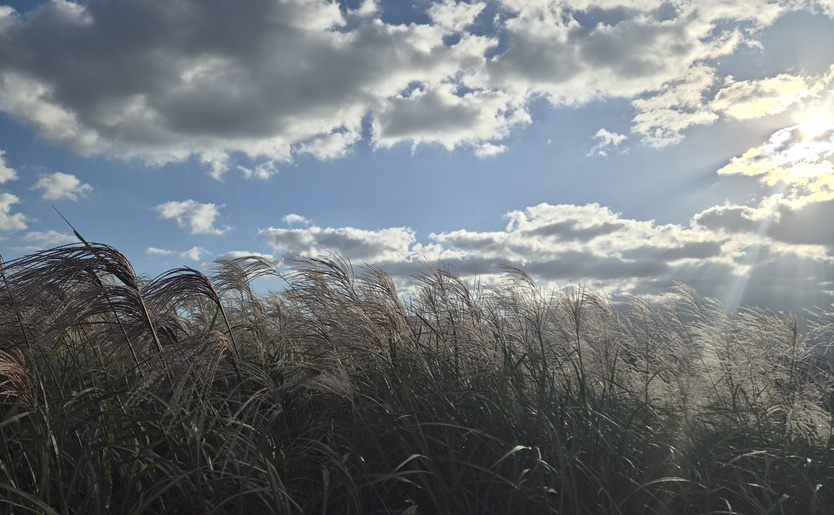
Sangumburi Jeju Autumn: What the Grass Looked Like on October 6
This is probably the most useful thing I can share from my visit.
On October 6, the silver-grass plumes were already full enough to hide much of the stalks.
I wouldn’t describe the entire field as being at peak bloom. The grass was still at different stages, and I don’t have a verified peak date for the whole area.
But it certainly wasn’t a case of arriving too early and finding nothing to see.
That distinction matters.
A lot of autumn travel guides mention the second half of October, and it’s easy to assume the first week won’t be worthwhile. My October 6 visit suggests otherwise for the 2026 season.
Still, don’t treat October 6 as a guaranteed perfect date for future years. Silver grass responds to weather and seasonal conditions, not a fixed calendar.
When Is the Best Time to See Silver Grass at Sangumburi?
October is generally the month to look at first.
But there’s no single date when all the grass suddenly looks perfect. The plumes develop gradually, and their appearance changes with the weather.
Here’s a practical guide to the season.
| Period | What to Expect |
|---|---|
| Late September | The grass may still be developing |
| Early October | Already looking full on October 6, 2026 |
| Mid-October | A commonly recommended time for autumn silver grass |
| Late October | More mature silver or golden-brown plumes, depending on conditions |
| Early November | Autumn scenery may remain attractive, but the grass can look different |
Only the October 6 observation is based on my firsthand visit in 2026. The rest is general seasonal guidance, not a record of what the fields looked like on those exact dates this year.
Should You Wait Until Late October?
Not necessarily.
If your trip is already booked for early October, I wouldn’t change it just because an older travel guide suggests a later date.
For this year’s Sangumburi Jeju autumn season, the grass was already looking substantial on October 6.
That said, early bloom doesn’t guarantee what the fields will look like several weeks later.
For the most useful update, check recently taken photos close to your travel date. Be careful with social media posts that recycle older autumn photos without mentioning when they were taken.
What Is Sangumburi, Anyway?
Sangumburi (산굼부리) is a volcanic crater in Jocheon-eup, in the inland part of Jeju Island.
Jeju has many small volcanic hills called oreums. Sangumburi is unusual because it’s known for a large crater depression rather than a high summit.
It’s a maar-type volcanic crater, formed through explosive volcanic activity.
The site is protected as Natural Monument No. 263, and its crater is also home to different types of vegetation.
Visitors follow designated paths toward the observation area. You don’t climb down into the protected crater itself.
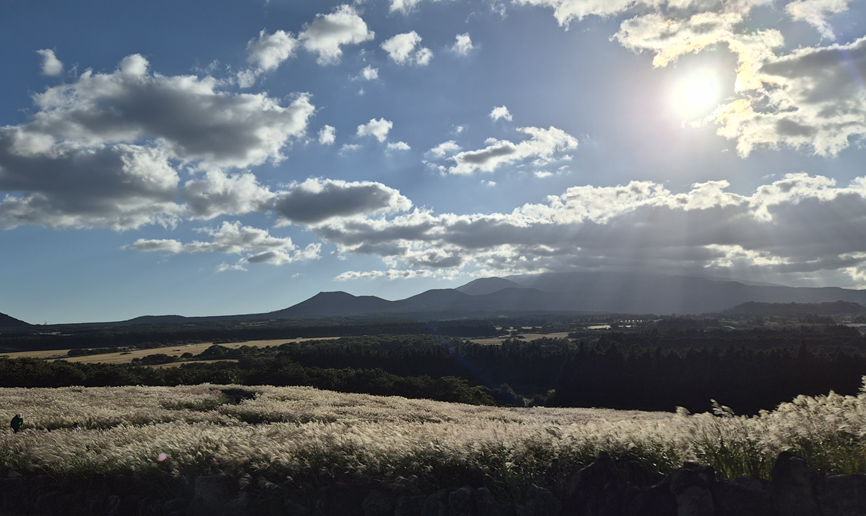
In autumn, the grass surrounding the visitor routes is a major part of the appeal.
So you’re not simply paying to walk through a field of grass. There’s an interesting piece of Jeju’s volcanic landscape behind it.
How Long Do You Need at Sangumburi?
You don’t need to set aside a whole day for Sangumburi itself.
Visit Jeju estimates around 40 minutes for sightseeing. That’s a useful baseline, although it doesn’t account for everyone’s walking pace or photography stops.
I’d allow a little more time if you’re visiting during the silver-grass season.
| Visit Style | Suggested Time |
|---|---|
| Quick visit | 40–50 minutes |
| Walk and photos | 60–90 minutes |
| Relaxed photography | 90 minutes or longer |
These are suggested planning times, not the actual duration of my October 6 visit.
Around an hour to an hour and a half should be a comfortable allowance for many travelers.
You can follow the main paths, see the crater viewpoint and spend some time taking photos without rushing through everything.
If you’re combining Sangumburi with another attraction, remember to include parking, tickets and travel time.
Is Sangumburi Difficult to Walk?
Not particularly, compared with some of Jeju’s steeper volcanic hills.
Sangumburi is more of a scenic walk than a serious mountain hike.
The main visitor route rises toward the crater observation area. Some of the walking surfaces are maintained, but the grounds aren’t completely flat and there are steps in certain areas.
For most travelers, comfortable walking shoes are a sensible choice.
However, if you’re traveling with older parents or someone with mobility limitations, it’s worth checking the route before you go.
According to Korea Tourism Organization’s accessibility information, the entrance approach is wheelchair-accessible, but stairs restrict wheelchair access to the observation deck.
So while the walk is relatively manageable for many visitors, the whole attraction isn’t step-free.
Do You Need Hiking Shoes?
Usually not for ordinary sightseeing in dry weather.
Comfortable sneakers with decent grip should be enough for most visitors. If it’s raining or you need additional support, choose sturdier footwear.
There’s no need to turn a visit to the silver grass into a full hiking-equipment shopping trip.
Morning or Late Afternoon: Which Is Better?
If Sangumburi is one stop in a longer Jeju itinerary, morning is convenient.
You can walk around, take your photos and still have plenty of time for another attraction.
Arriving earlier may also help you avoid some of the busier hours, although that’s never guaranteed during autumn weekends.
Late afternoon can be attractive for photography.
When the sun is lower, the light can pass through the feathery grass and give the landscape a warmer look.
But keep the opening hours in mind.
Sangumburi isn’t an unrestricted sunset viewpoint.
During October, the published closing time is 6:40 PM, with last admission at 6:00 PM.
If you arrive too close to closing, you may not have enough time to enjoy the walking route.
For most visitors, I’d choose the time that fits the rest of the day rather than rearranging everything for a particular photo.
What to Wear at Sangumburi in October
Jeju’s autumn weather can feel comfortable, but wind is worth preparing for.
Sangumburi has a fairly open landscape, which means exposed sections may feel cooler than expected.
A light jacket or windbreaker is a practical choice.
You’ll also want shoes that are comfortable enough for an hour or more of walking.
If you’re visiting in November, bring warmer layers.
And if the forecast shows heavy rain or strong wind, consider changing your plans.
Most of the experience is outdoors. Poor visibility and wet, uncomfortable conditions can make the scenery less enjoyable.
A clear day with slightly less-than-perfect grass may be a better experience than visiting during heavy rain just because someone called it peak season.
Where to Take Photos at Sangumburi
You don’t need to find a secret viewpoint to get good silver-grass photos.
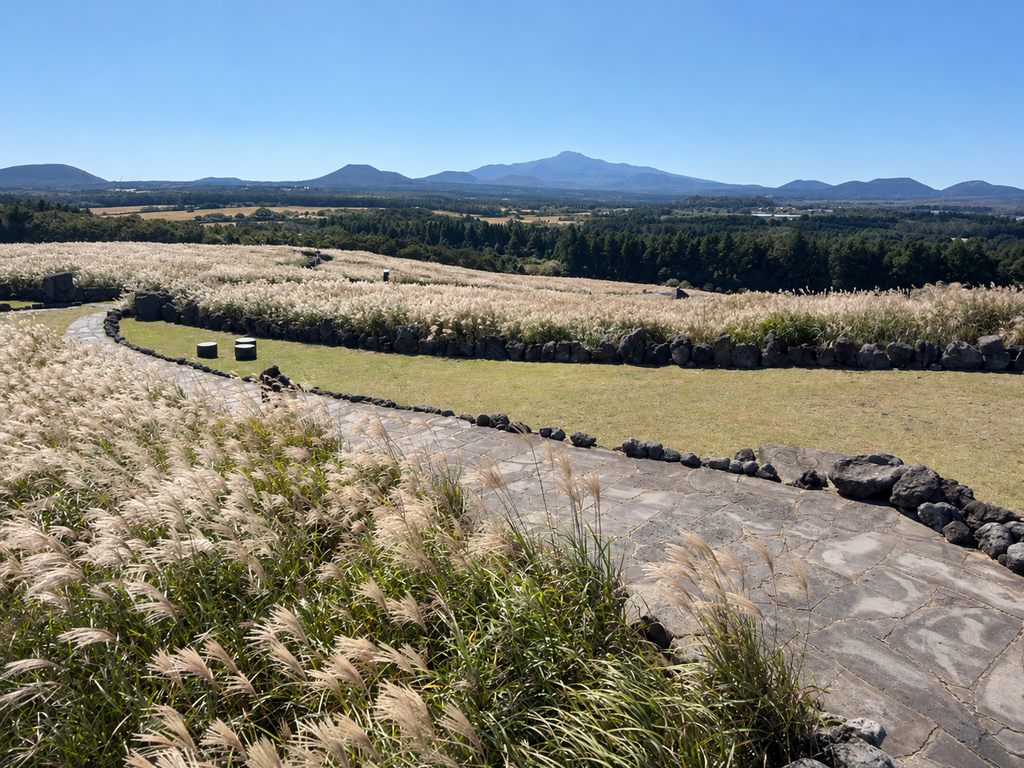
The designated walking routes already provide several different angles.
Along the Silver-Grass Paths
Look for sections where the tall grass grows beside the trail.
They’re useful for photos showing the path leading through the autumn landscape.
Stay on the designated walking routes rather than stepping into the grass to get closer.
Near the Crater Viewpoint
Try a wider composition that includes the volcanic landscape.
It’s a good way to show what makes Sangumburi different from an ordinary grass field.
Where the Landscape Opens Up
If you find a clear view toward the surrounding oreums, include the hills in the background.
The scenery can feel quite different depending on the direction you’re facing.
Sangumburi Entrance Fee and Opening Hours in 2026
Here are the published visitor details checked on October 12, 2026.
| Information | Current Published Details |
|---|---|
| Adult admission | ₩7,000 |
| Teenagers and children | ₩6,000 |
| Eligible discounted admission | ₩5,000 |
| March–June and September–October | 9:00 AM–6:40 PM |
| Last admission during these months | 6:00 PM |
| July–August and November–February | 9:00 AM–5:40 PM |
| Last admission during these months | 5:00 PM |
| Parking | Available, listed as free |
| Regular closing days | Open year-round |
| Pets | Not permitted |
Address: 768 Bijarim-ro, Jocheon-eup, Jeju-si, Jeju-do, South Korea
Korean name: 산굼부리
Phone: +82-64-783-9900
Some visitors may qualify for discounted admission, including eligible seniors and Jeju residents. Check the requirements if you’re expecting a reduced ticket price.
Opening hours can change because of weather conditions.
For the latest visitor information, check the official Visit Jeju Sangumburi page.
How to Get to Sangumburi
Sangumburi is located inland, away from many of Jeju’s coastal attractions.
That isn’t much of a problem if you’re driving, but it matters if you’re relying on buses.
By Rental Car
A rental car is usually the easiest option if you’re exploring central or eastern Jeju.
Search for 산굼부리 in your navigation app, or enter the address above.
Parking is available, and Korea Tourism Organization lists it as free.
If you’re unfamiliar with Korean navigation apps, my guide to using Naver Map in Korea explains how to search for places and check routes.
A car also makes it much easier to combine Sangumburi with another nearby attraction.
By Bus
You can visit Sangumburi without a rental car.
According to the Jeju Bus Information System timetable effective February 12, 2026, bus 212 serves the Sangumburi stop.
The route connects the area with Jeju City and eastern Jeju.
However, buses aren’t especially frequent. The official timetable lists intervals of approximately 62–85 minutes toward Seongsan and 65–85 minutes toward Jeju City.
That means missing a departure can add a considerable wait to your trip.
Before leaving, check both directions on the Jeju Bus Information System.
By Taxi
A taxi is another option if you’d rather avoid bus transfers.
The journey there may be straightforward, but don’t assume you’ll find an available taxi waiting outside when you’re ready to leave.
Check your taxi-app options beforehand, especially for the return journey.
Is Sangumburi Practical Without a Car?
Possible? Yes.
Convenient? That depends on where you’re staying and how flexible your day is.
If Sangumburi is one of your main stops, taking public transport can make sense.
If you’re trying to squeeze several attractions into a short itinerary, the bus schedule may take up more time than expected.
The return journey is the part I’d plan first.
Is Sangumburi Worth Visiting on a 2–3 Day Jeju Trip?
It depends on what else you’re planning.
If you’re visiting during silver-grass season, have a car and enjoy outdoor photography, Sangumburi is an easy place to consider.
It’s also a reasonable choice for travelers who want scenery without committing to a demanding oreum hike.
But if you only have one full day in Jeju, no car and several other attractions you care more about, I wouldn’t cross the entire island just for Sangumburi.
Travel time matters.
Bad weather is another reason to put it lower on the list. The views are the main attraction, and you won’t get the same experience when visibility is poor.
Sangumburi vs Saebyeol Oreum
Both places are associated with Jeju’s autumn silver grass, but they’re different outings.
Sangumburi offers a maintained visitor route, silver-grass scenery and a volcanic crater viewpoint.
Saebyeol Oreum, in western Jeju, involves more of an uphill climb. It’s better suited to travelers who want the experience of walking up an oreum.
If a relatively easy scenic stop is what you’re after, Sangumburi may be more comfortable.
If you enjoy climbing volcanic hills, Saebyeol Oreum might suit you better.
You don’t need to visit both simply because they’re often mentioned together.
What Else Is Near Sangumburi?
If you’re already exploring inland Jeju, it makes sense to combine Sangumburi with another nearby attraction rather than driving back and forth across the island.
Jeju Stone Park is an option if you’re interested in Jeju’s geology, stone culture and local mythology. It has both outdoor grounds and museum exhibits. The park is generally closed on Mondays, with holiday exceptions, so check its schedule.
Gyorae Natural Recreation Forest offers a different atmosphere, with walking trails through Jeju’s gotjawal forest landscape.
You don’t need to do both.
For a relaxed half-day, I’d visit Sangumburi, choose one additional stop if the timing works, and leave some room for lunch.
If you’re using buses, check the connections before planning a multi-stop trip.
A Few Things Worth Knowing Before You Go
The biggest mistake would be treating the silver-grass peak as a fixed date.
For the 2026 Sangumburi Jeju autumn season, my October 6 visit showed that the plumes were already quite full. That doesn’t mean the same date will look identical next year.
I’d also check the weather, opening hours and return transportation.
Bring comfortable shoes and something for the wind. If you’re going late in the day, make sure you have enough time before last admission.
And remember that you don’t need to see every viewpoint or take a hundred photos to make the visit worthwhile.
Is Sangumburi Worth Making Time For?
For an October Jeju trip with decent weather and a sensible route, yes.
The main appeal is straightforward: silver-grass scenery, a volcanic crater and a walk that doesn’t require hours of strenuous hiking.
The October 6, 2026 visit is also a useful reminder that early October doesn’t automatically mean sparse silver grass.
Still, Sangumburi isn’t an essential stop for every traveler.
If getting there would take up most of your day, skipping it may be the better decision.
But if autumn scenery is one of the reasons you’re visiting Jeju, Sangumburi is worth considering.
Frequently Asked Questions
Was Sangumburi silver grass blooming in early October 2026?
Yes. On October 6, the plumes were already dense enough to hide much of the stalks in the areas I saw. I wouldn’t describe the entire field as being at full bloom, though.
When is the best time to see silver grass at Sangumburi?
October is generally a good month to consider, although the exact timing changes each year. Check recent photos close to your travel date.
Is early October too soon to visit Sangumburi?
Not necessarily. The grass was already looking full during my October 6, 2026 visit. Conditions may be different in other years.
How long does a Sangumburi visit take?
Visit Jeju estimates approximately 40 minutes. Allow 60–90 minutes if you want to walk and take photos without rushing.
Is Sangumburi difficult to walk?
It’s generally less demanding than climbing a steep oreum, but the visitor route includes slopes and some steps.
Do you need hiking shoes at Sangumburi?
Not usually for normal sightseeing in dry weather. Comfortable sneakers with good grip are generally practical.
How much is the entrance fee in 2026?
Published individual admission is ₩7,000 for adults and ₩6,000 for teenagers and children. Eligible discounted admission is ₩5,000.
Can you get to Sangumburi without a car?
Yes. Bus 212 serves the Sangumburi stop, but the intervals can be long. Check the timetable in both directions before going.
Is Sangumburi worth visiting in the rain?
I’d usually prioritize a clearer day. The attraction is mainly outdoors, and wind, poor visibility or wet walking surfaces can affect the experience.
Can you visit Sangumburi in November?
Yes. The autumn scenery may still be attractive, but the appearance of the grass varies and opening hours become shorter.
Sources & Last Updated
This guide combines my October 6, 2026 visit with published information from official tourism and transportation sources.
Firsthand observation: On October 6, 2026, the silver-grass plumes were already dense enough to hide much of the stalks in the areas I saw, although I wouldn’t describe the entire site as fully bloomed.
Official information:
- Sangumburi Official Website
- Visit Jeju — Sangumburi Crater
- Korea Tourism Organization — Sangumburi
- Jeju Bus Information System
Visited: October 6, 2026
Information checked: October 12, 2026
Last updated: October 13, 2026
Silver-grass conditions, weather, opening hours and transportation can change. Check current information close to your visit date.